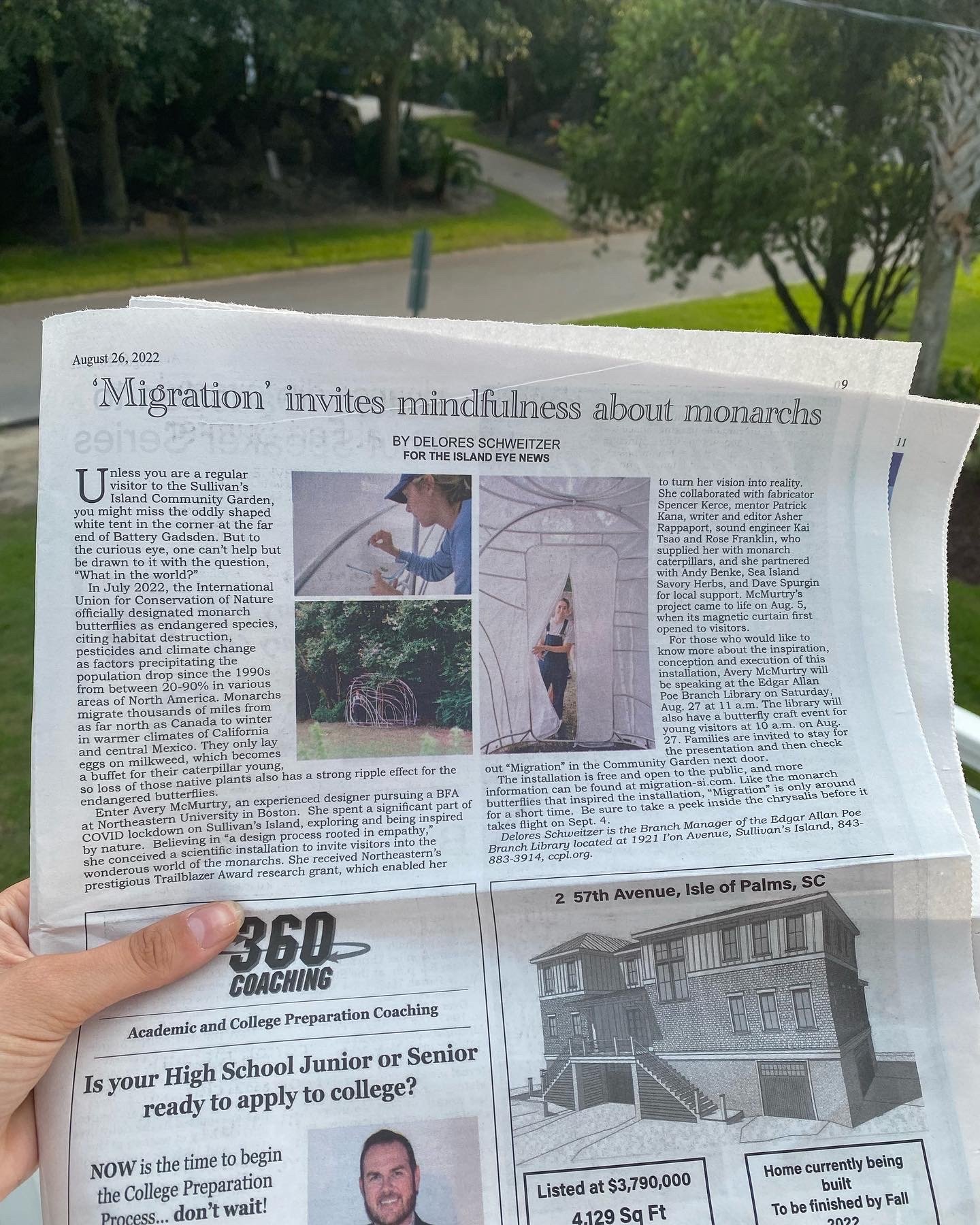
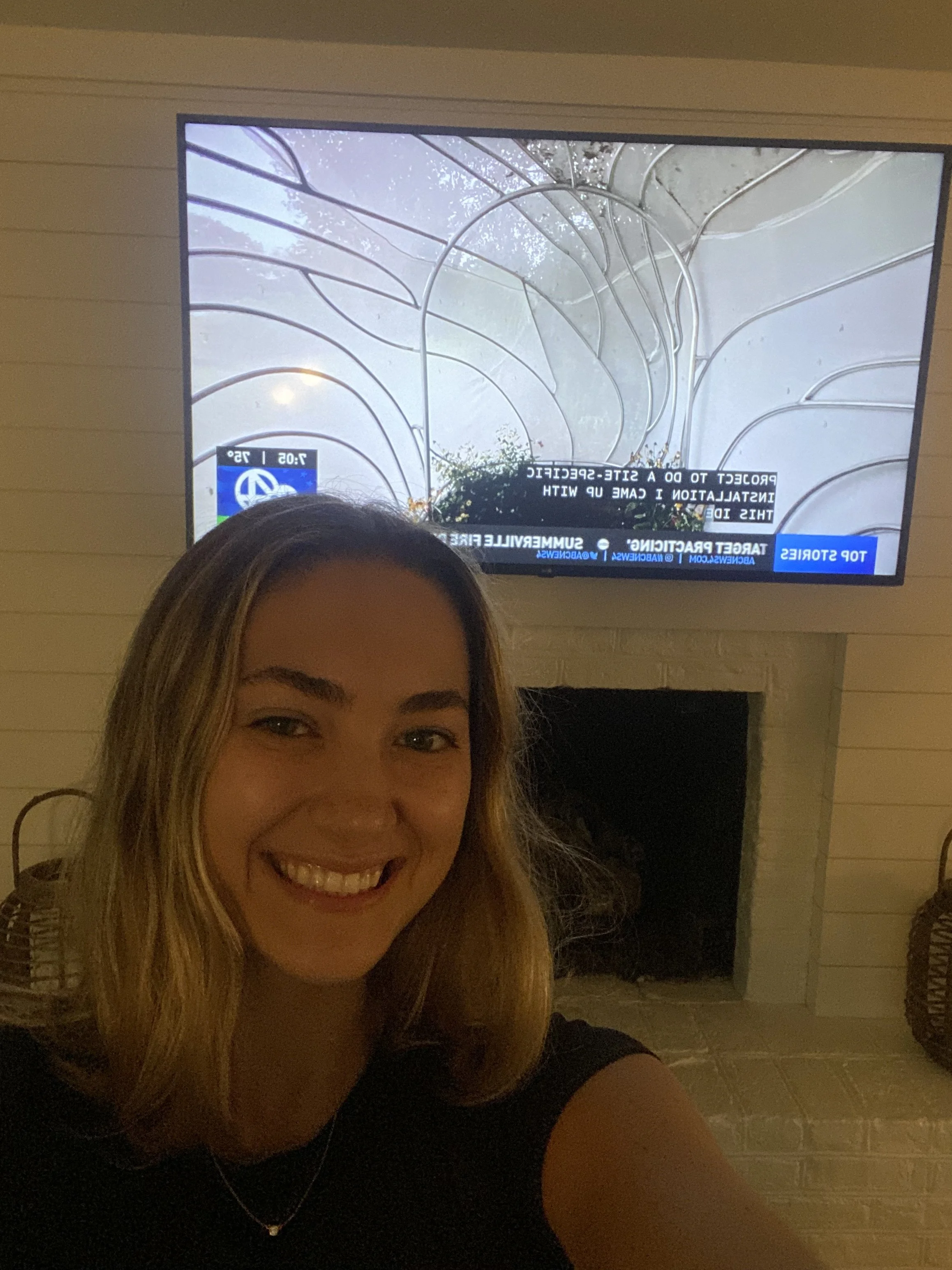
Migration:
A Designed Scientific Installation
Sullivan's Island, South Carolina — 2021–2022 Concept, experience design, fabrication, interpretive signage, and community engagement
The Design Problem
How do you design an experience around something most people have never noticed? A migration route passing directly overhead, through a forest that is quietly disappearing.
Every fall, monarch butterflies move through Sullivan's Island on their way south, stopping in a maritime forest that has been under threat of deforestation for decades. Migration has an important goal: to unify residents through love of nature and a sense of wonder.
Experience goals:
Give visitors a reason to stop, look closely, and linger
Create a durational experience that rewards return visits
Make the ecological process, not just the object, the experience
Connect the installation to the broader landscape and its history through interpretive content
Concept and Spatial Design
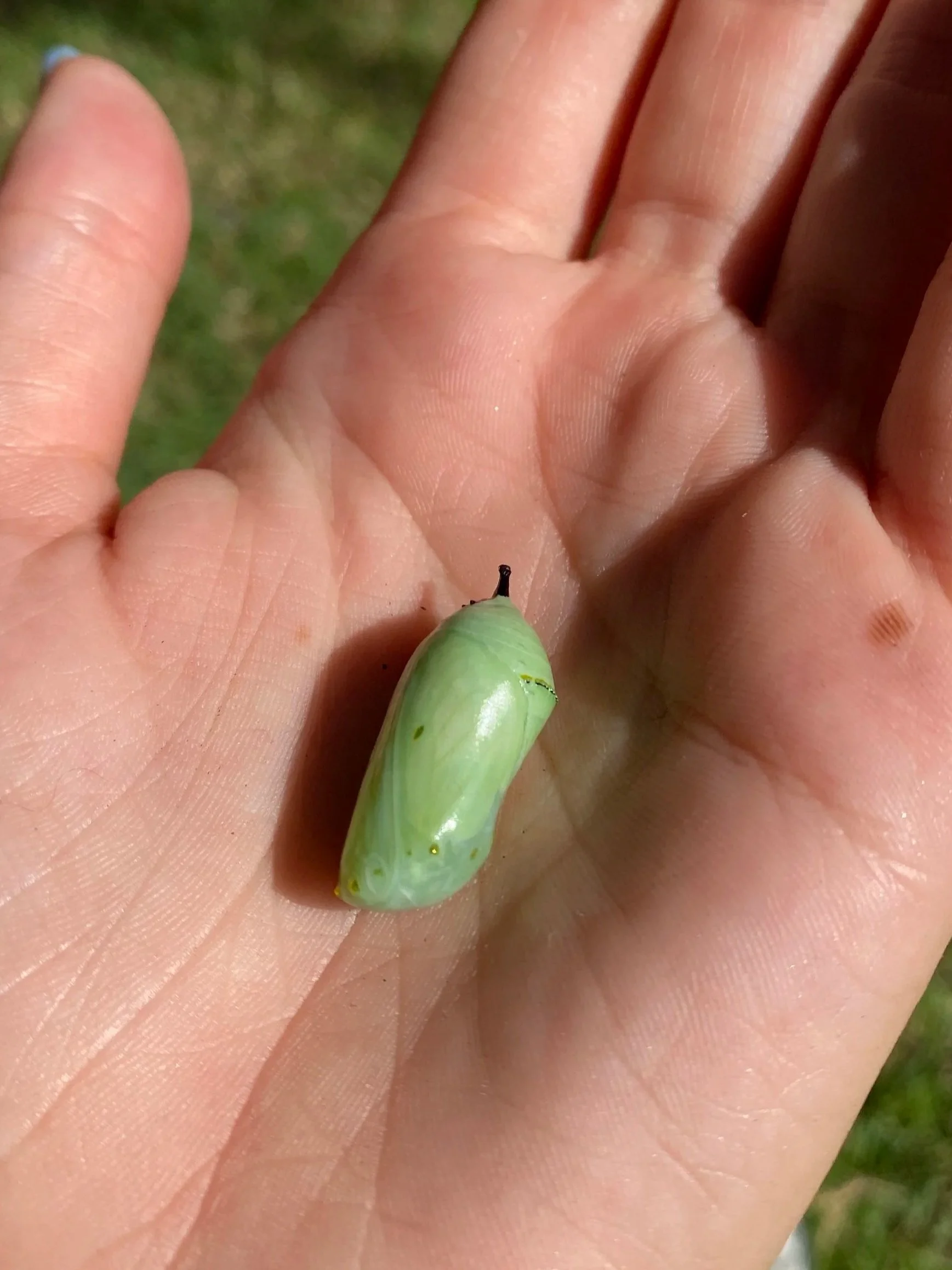
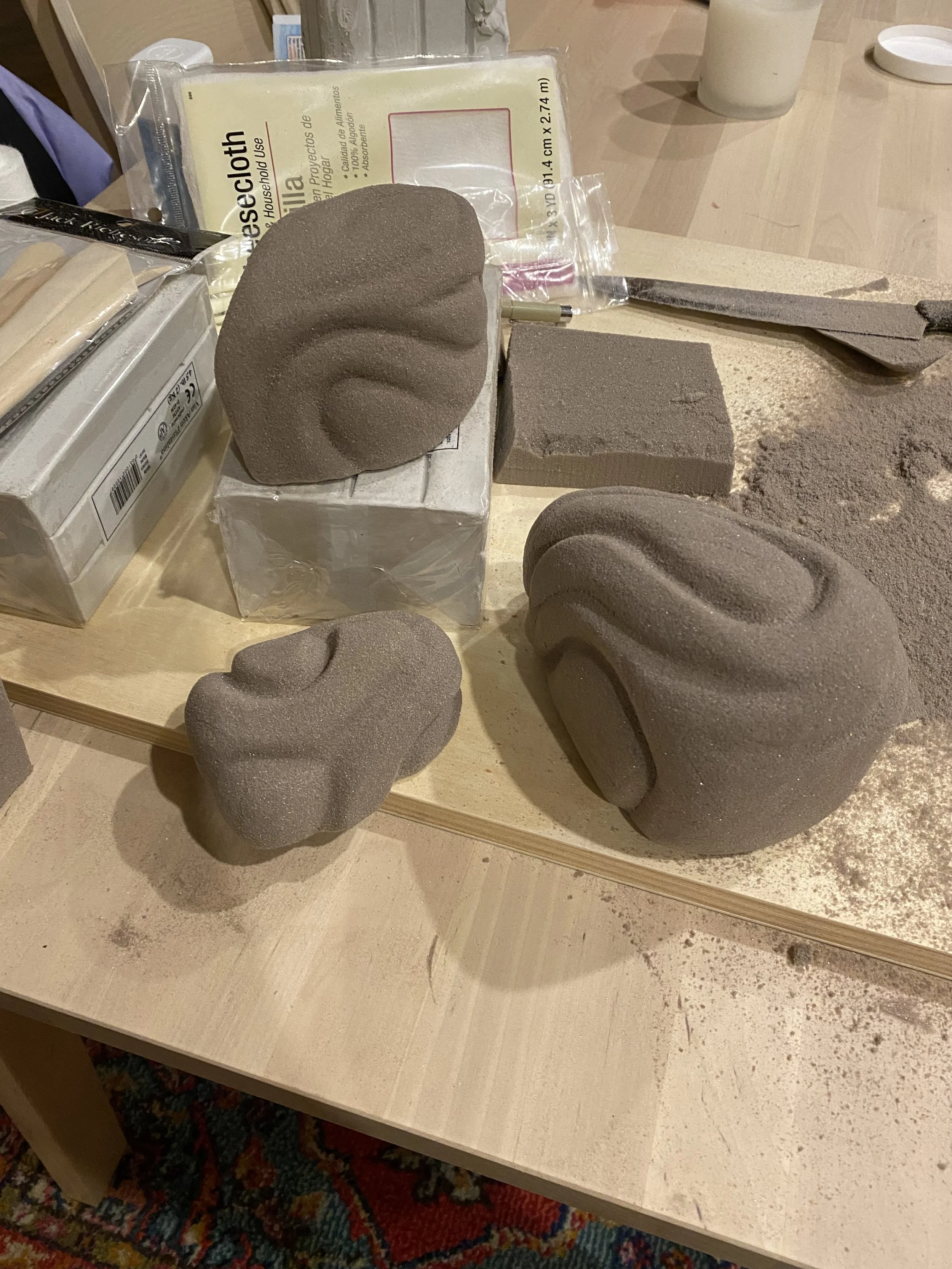
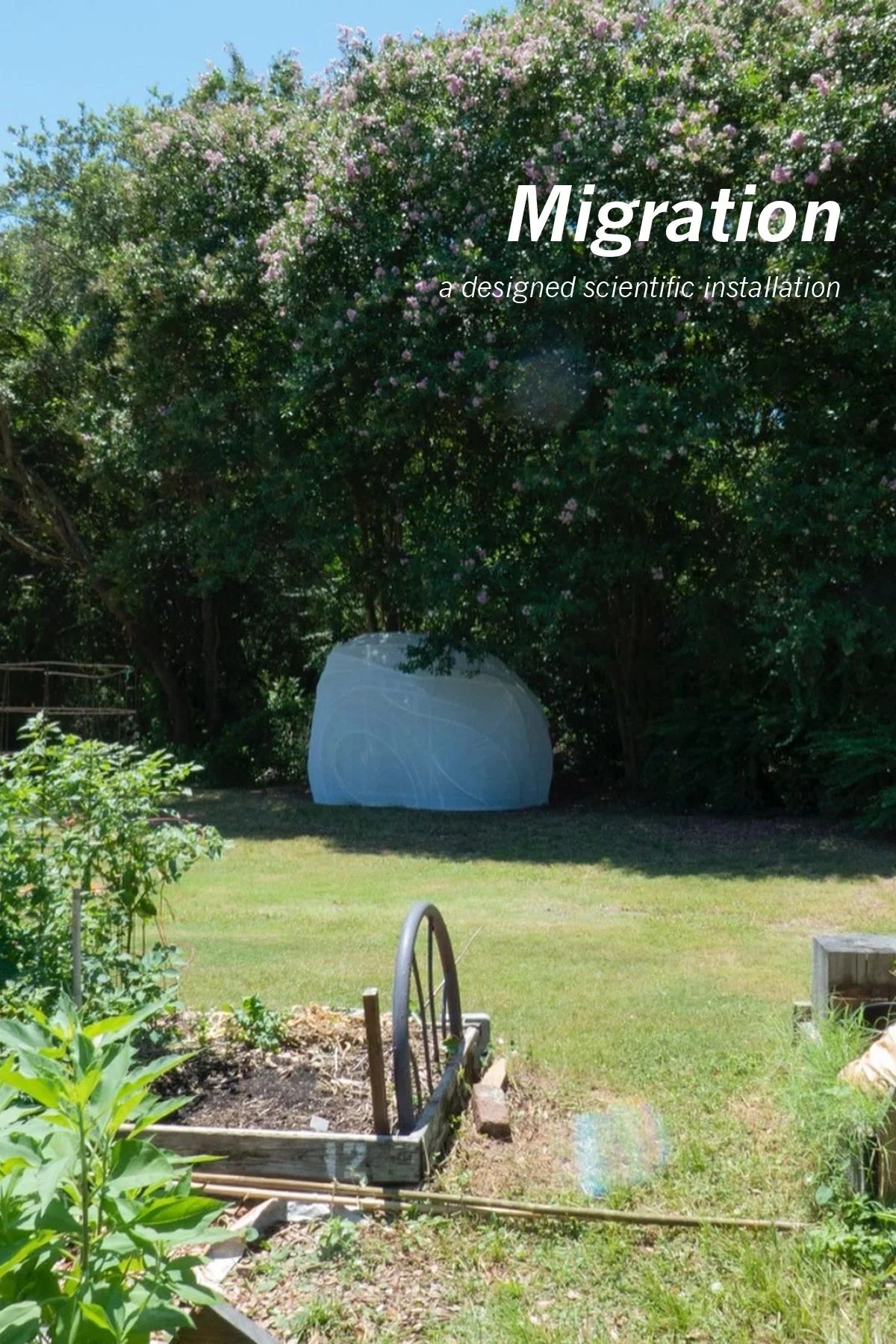
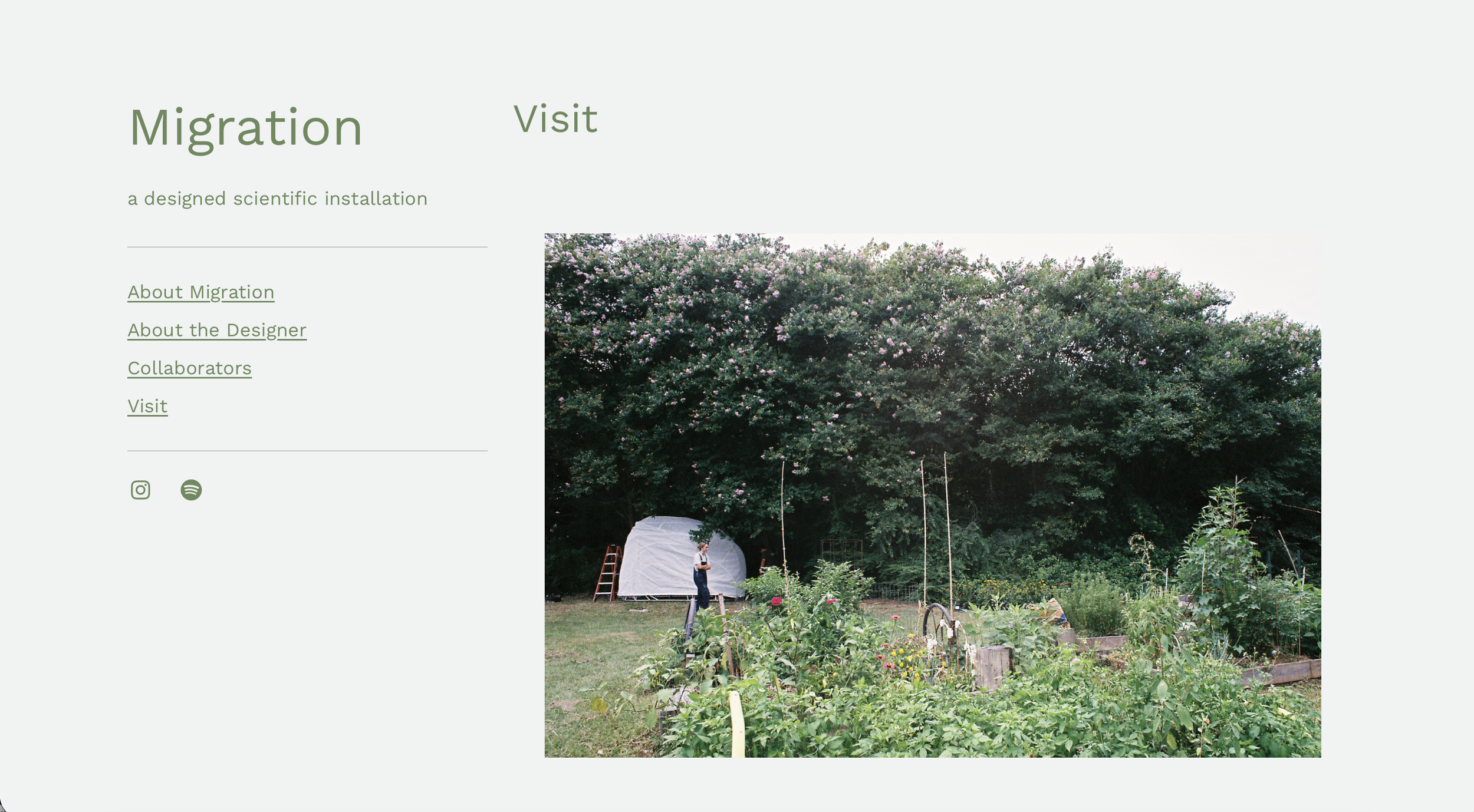
The sculpture's form was derived directly from the monarch's biology. The chrysalis is one of nature's most elegantly engineered objects.. I used this as my formal point of departure, sculpting a continuous arcing enclosure by hand using steady pressure and motion to find a shape that read as both organic and intentional.
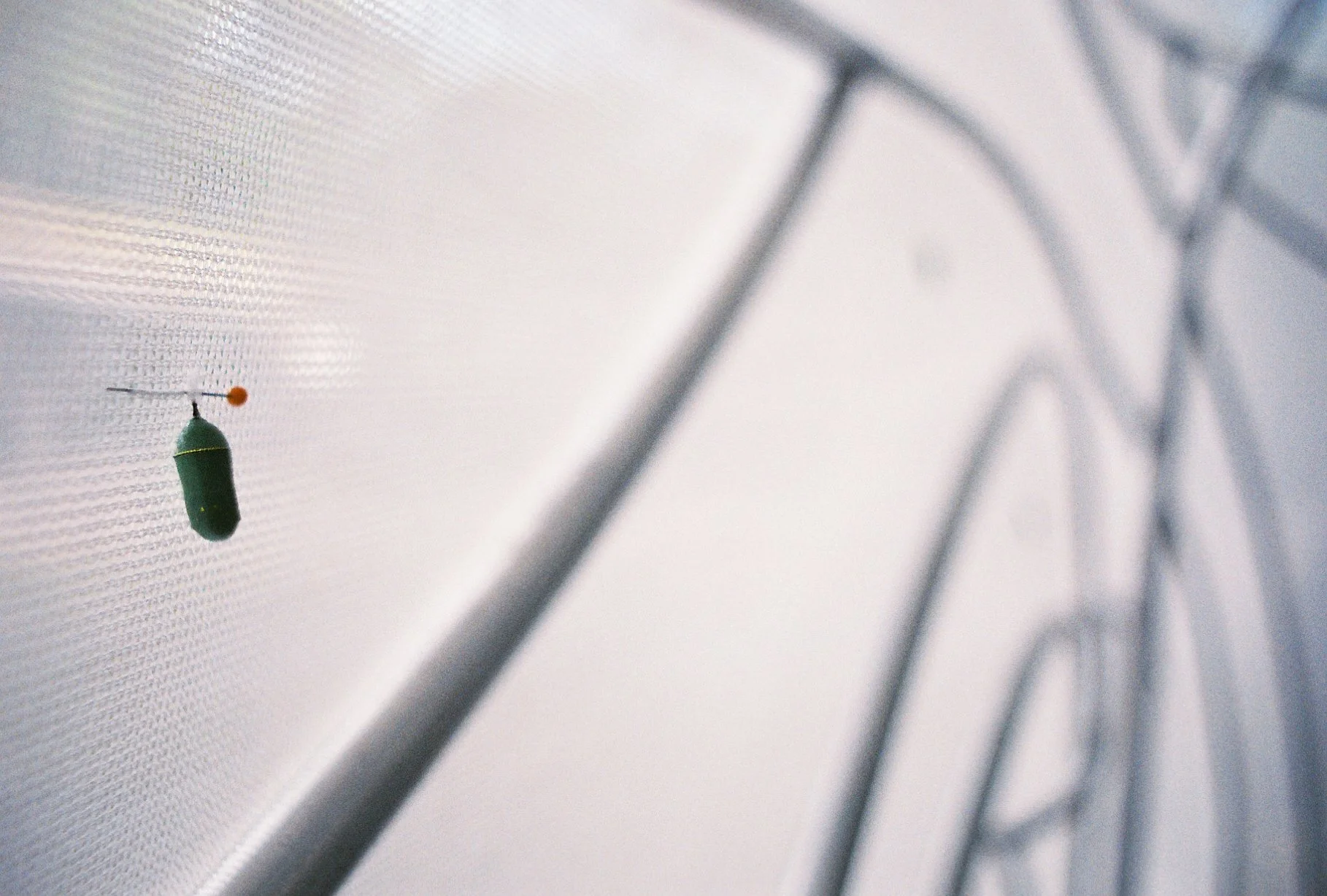
Early modeling tested how the structure would perform at multiple scales. As a landmark visible from the road, and as an intimate enclosure at human scale that rewarded close looking. The vinyl mesh overlay was chosen to filter light, protect the chrysalises inside, and allow visitors to see the living biological process without intervening in it.
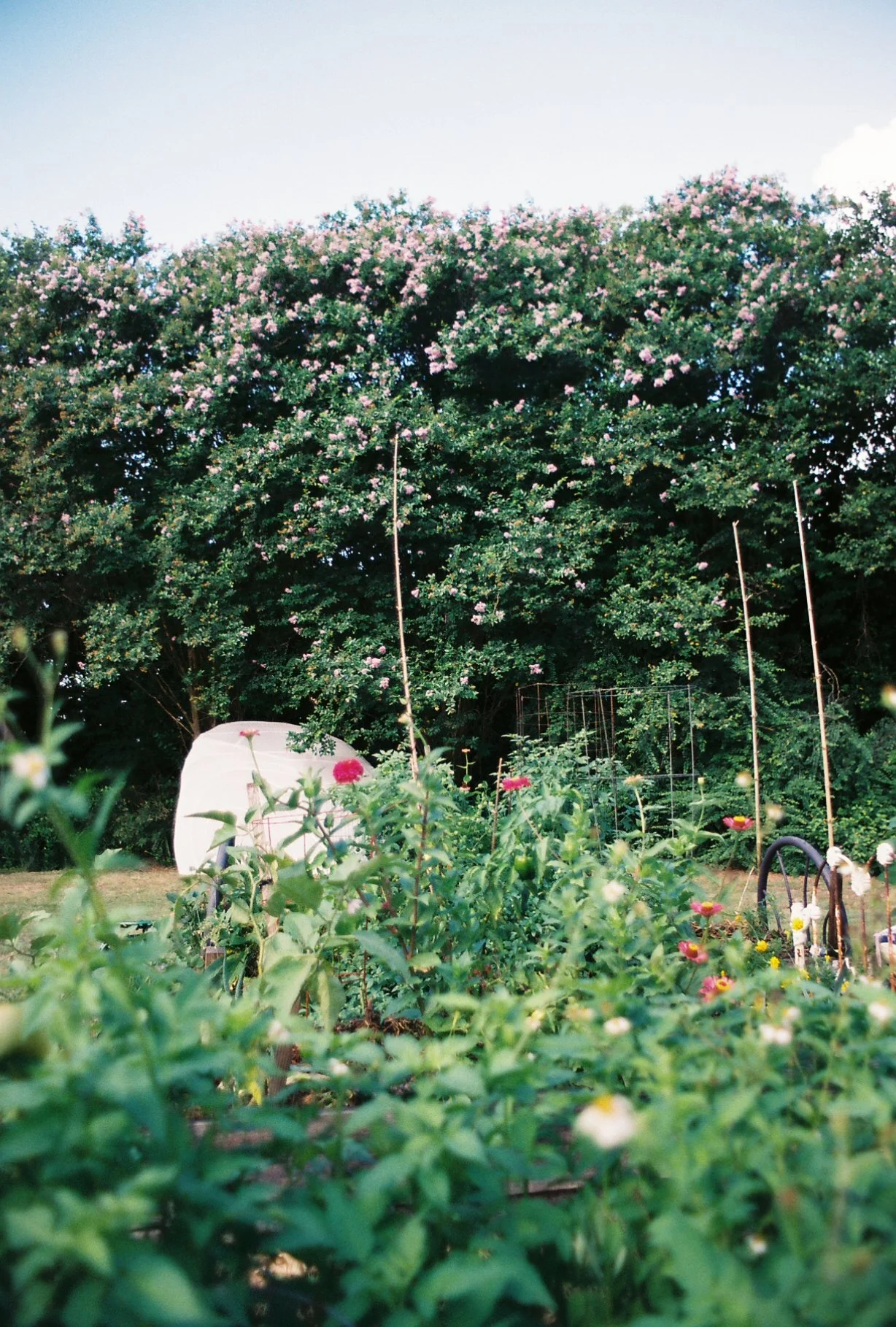
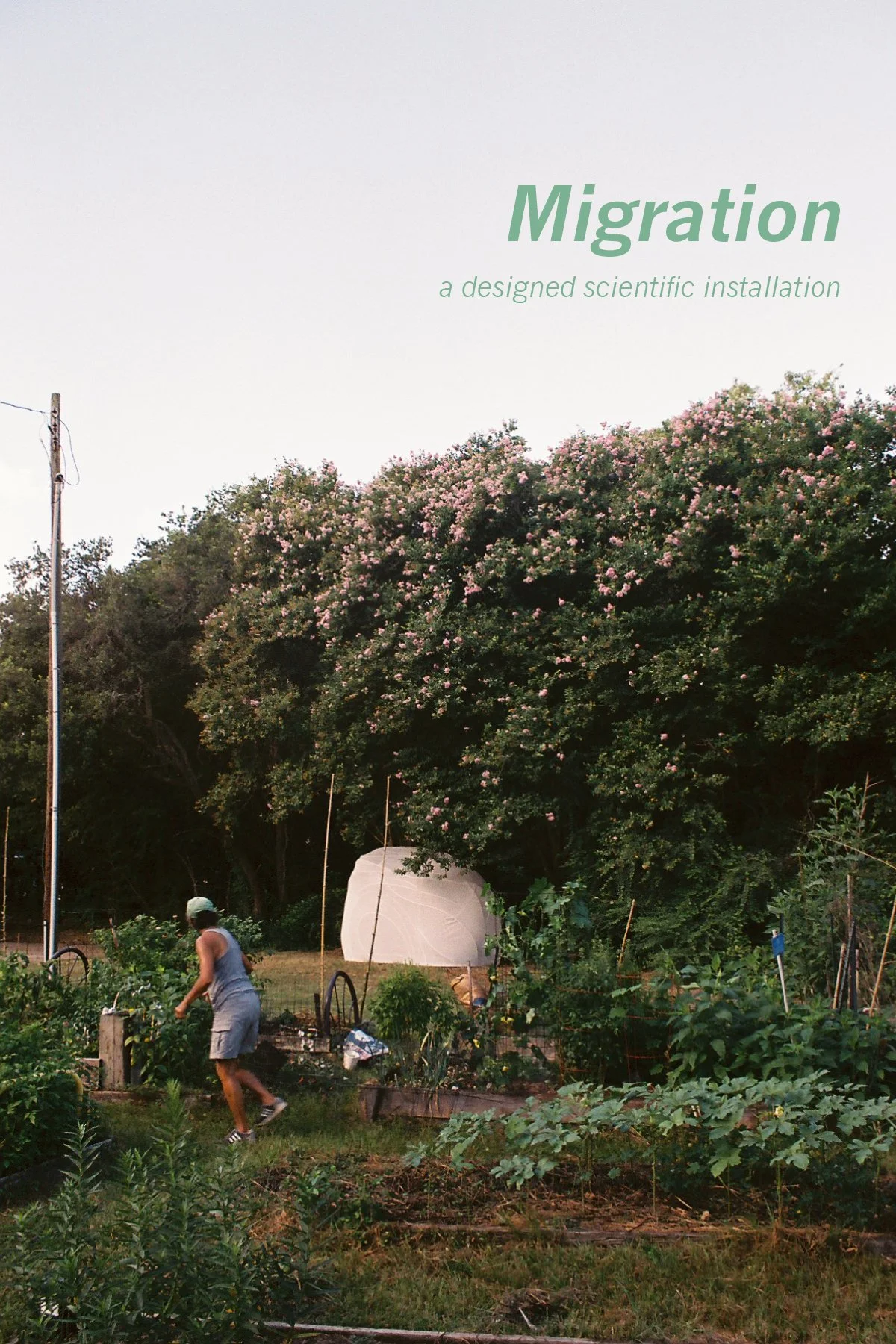
The final structure, aluminum frame overlaid with vinyl mesh, was fabricated in collaboration with Spencer Kerce, a local welder, and anchored along the tree line of the Sullivan's Island Community Garden.
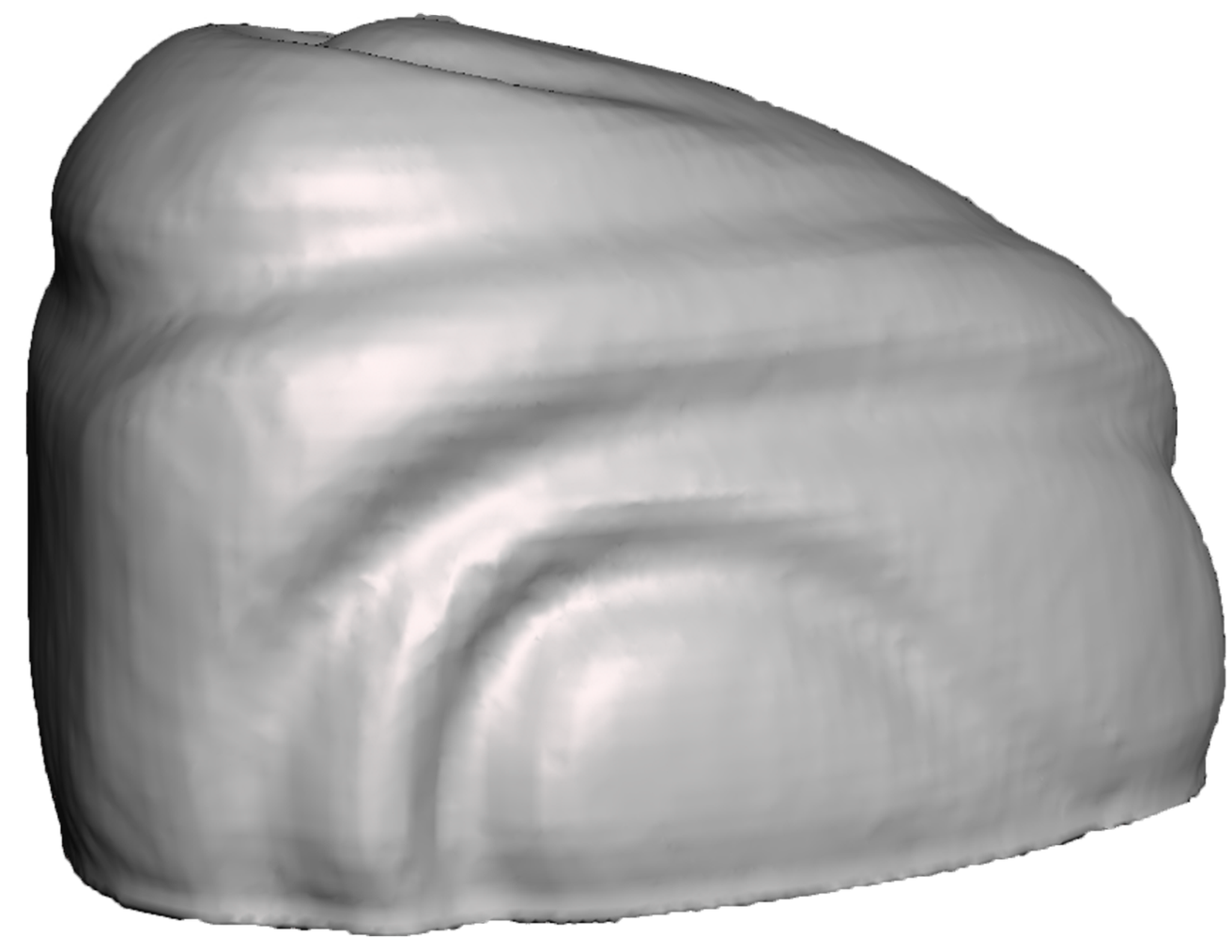
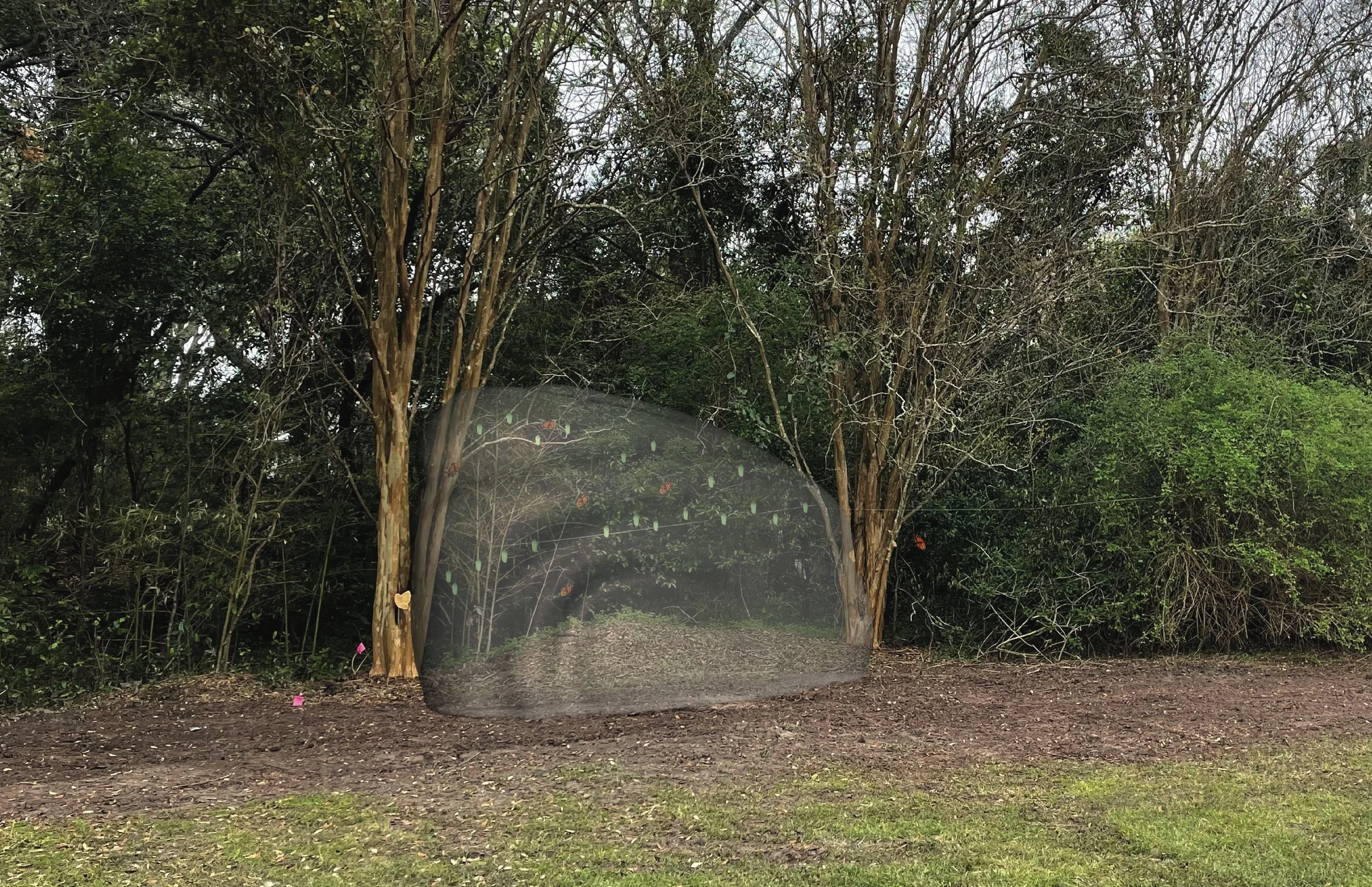
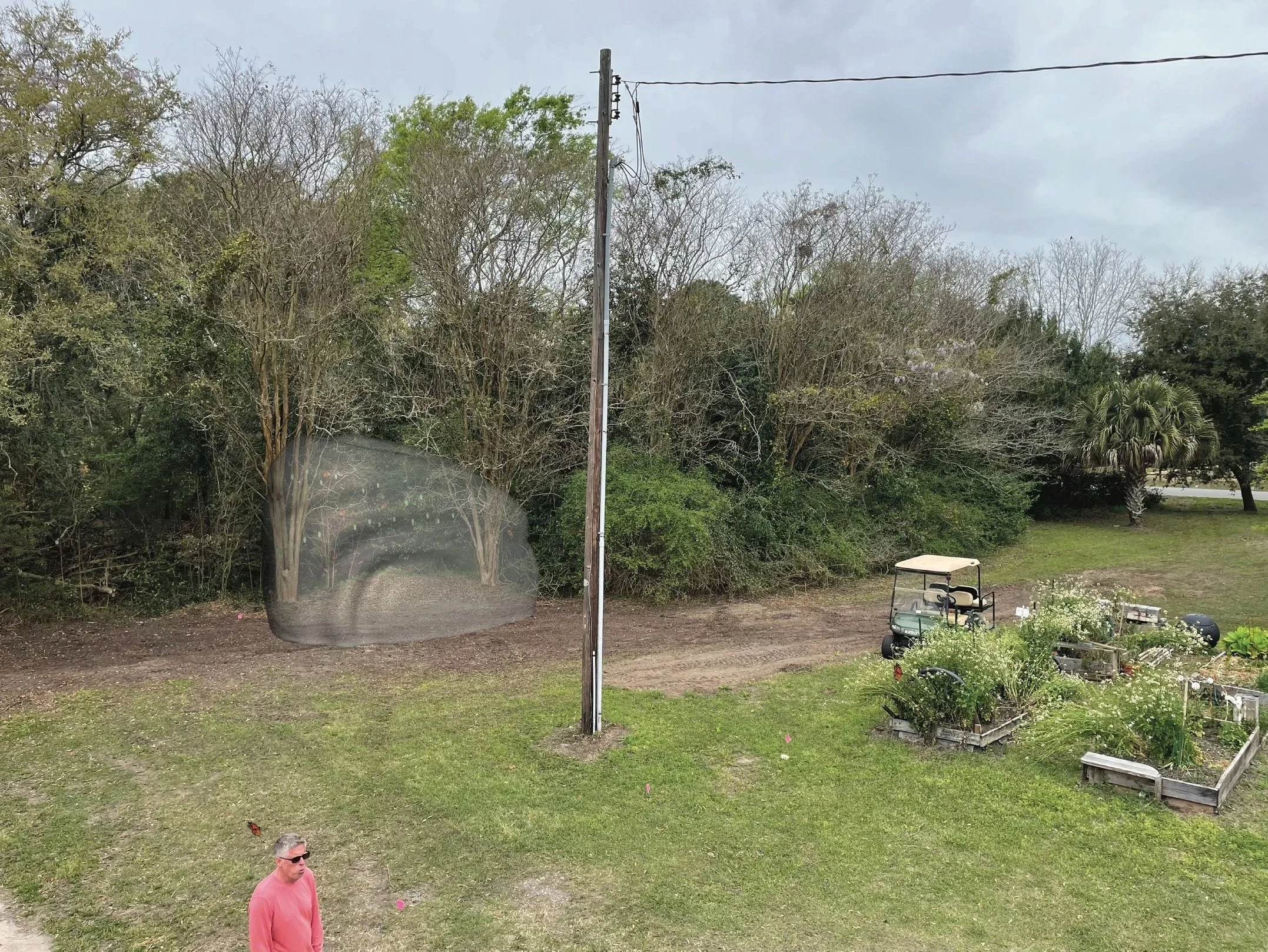
Testing the 3D model at the site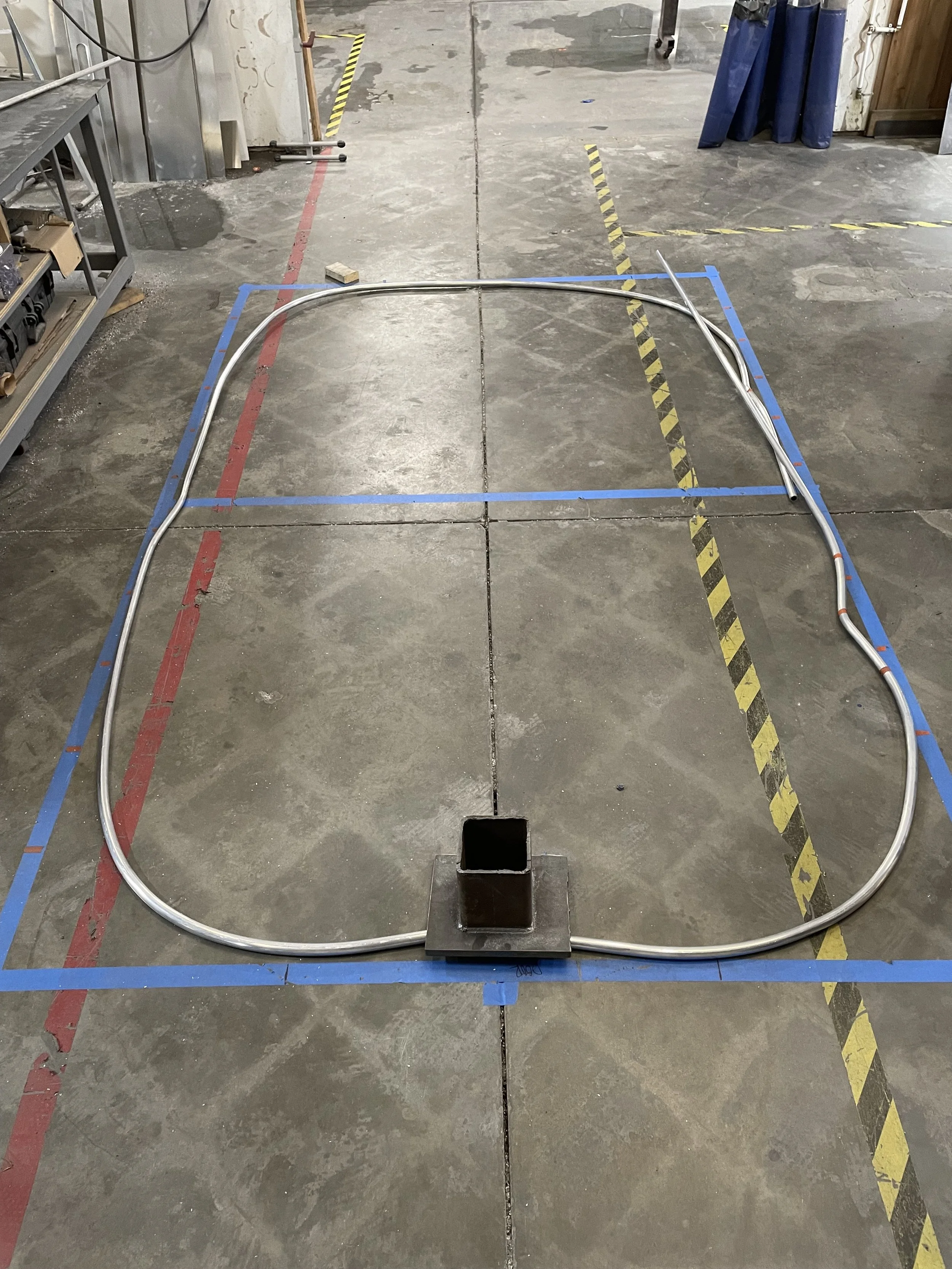
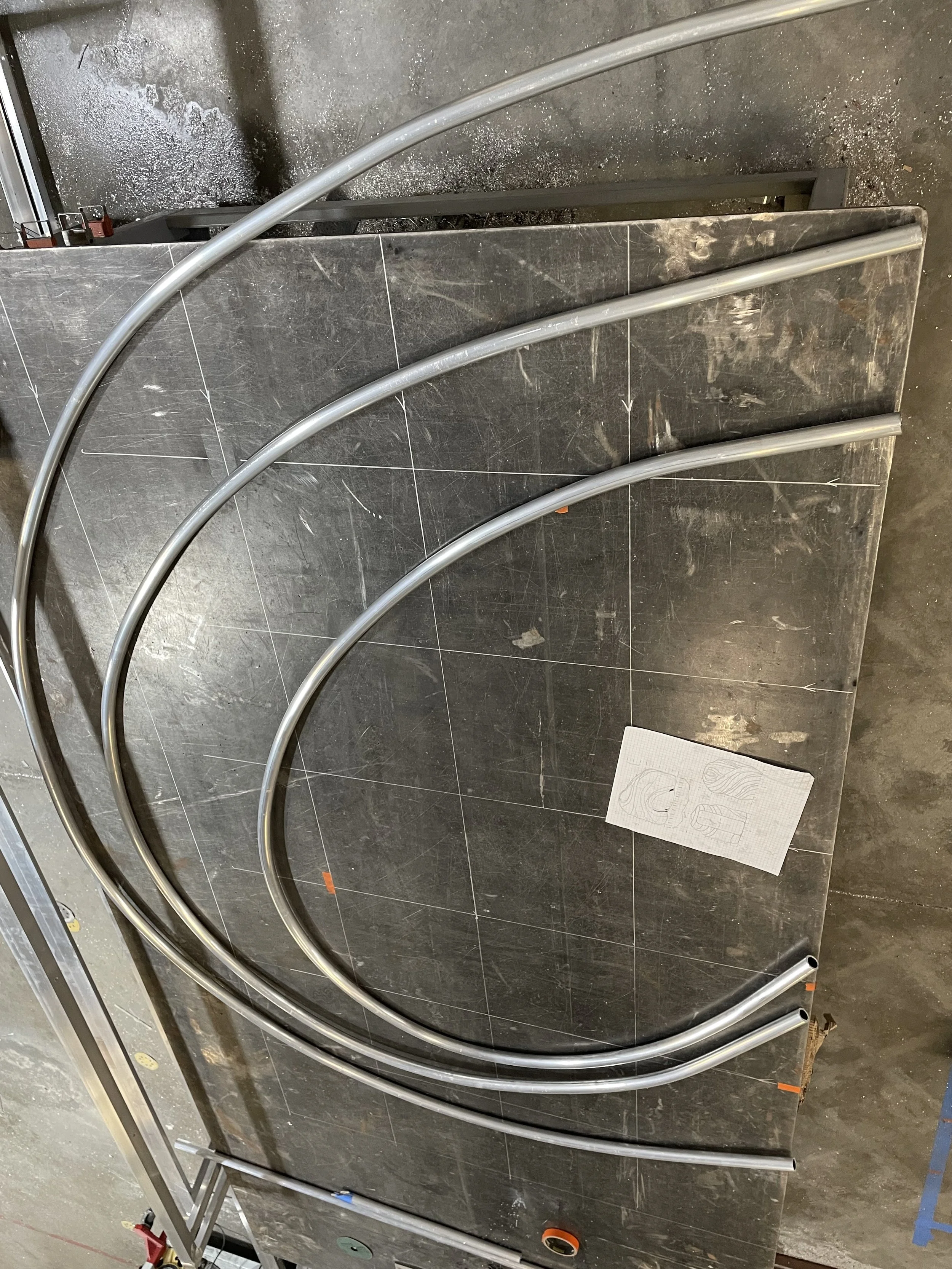
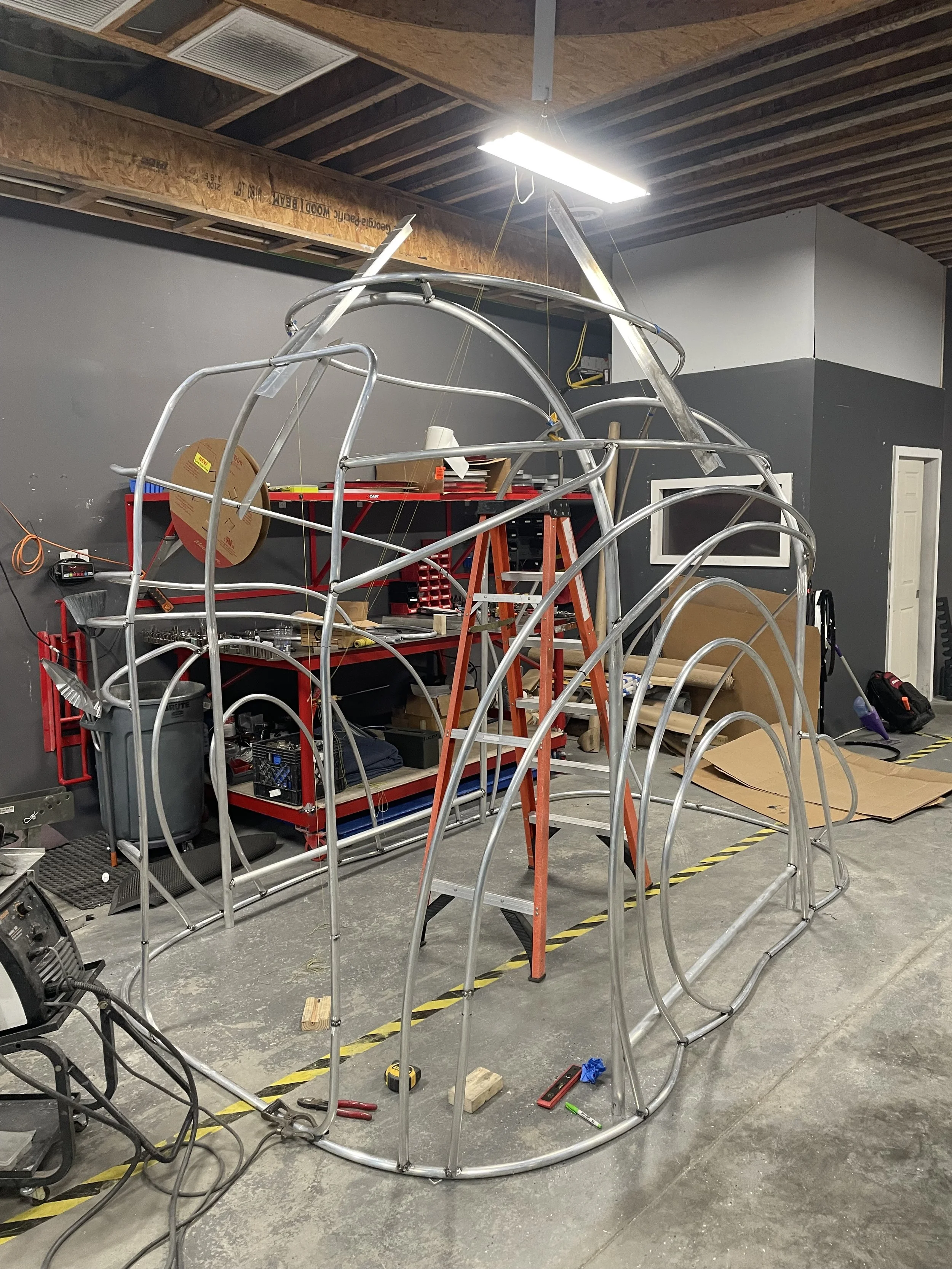
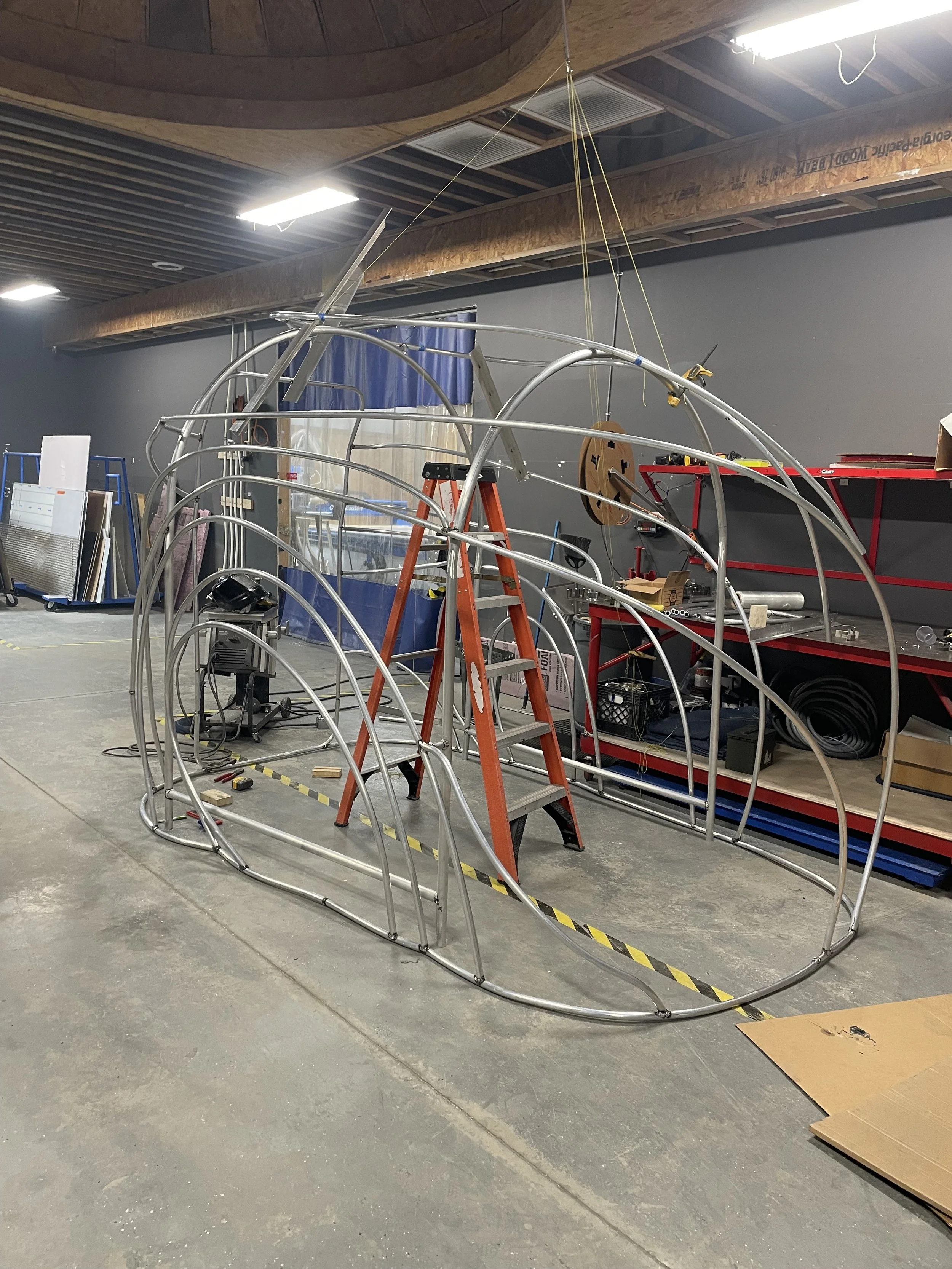
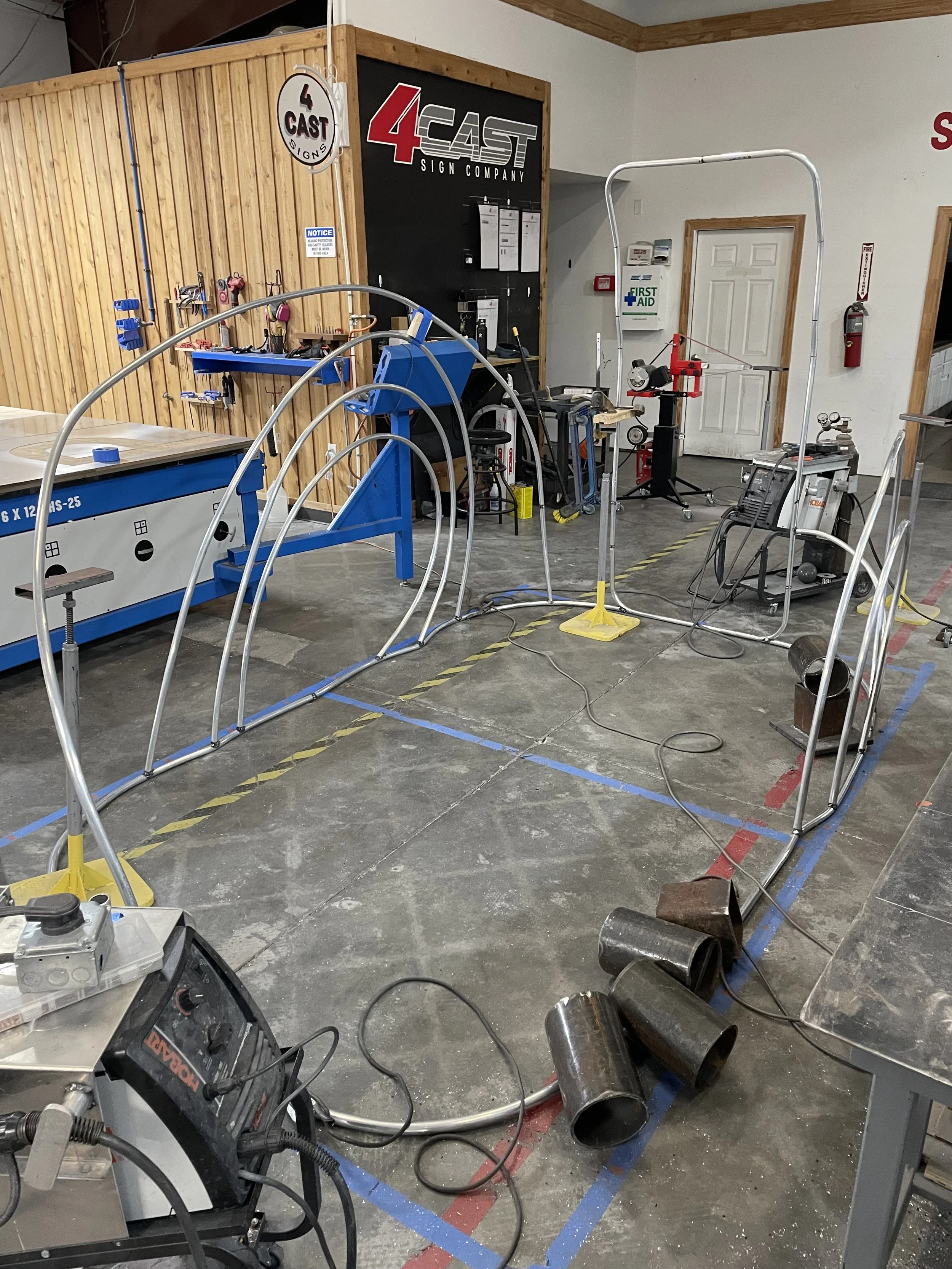
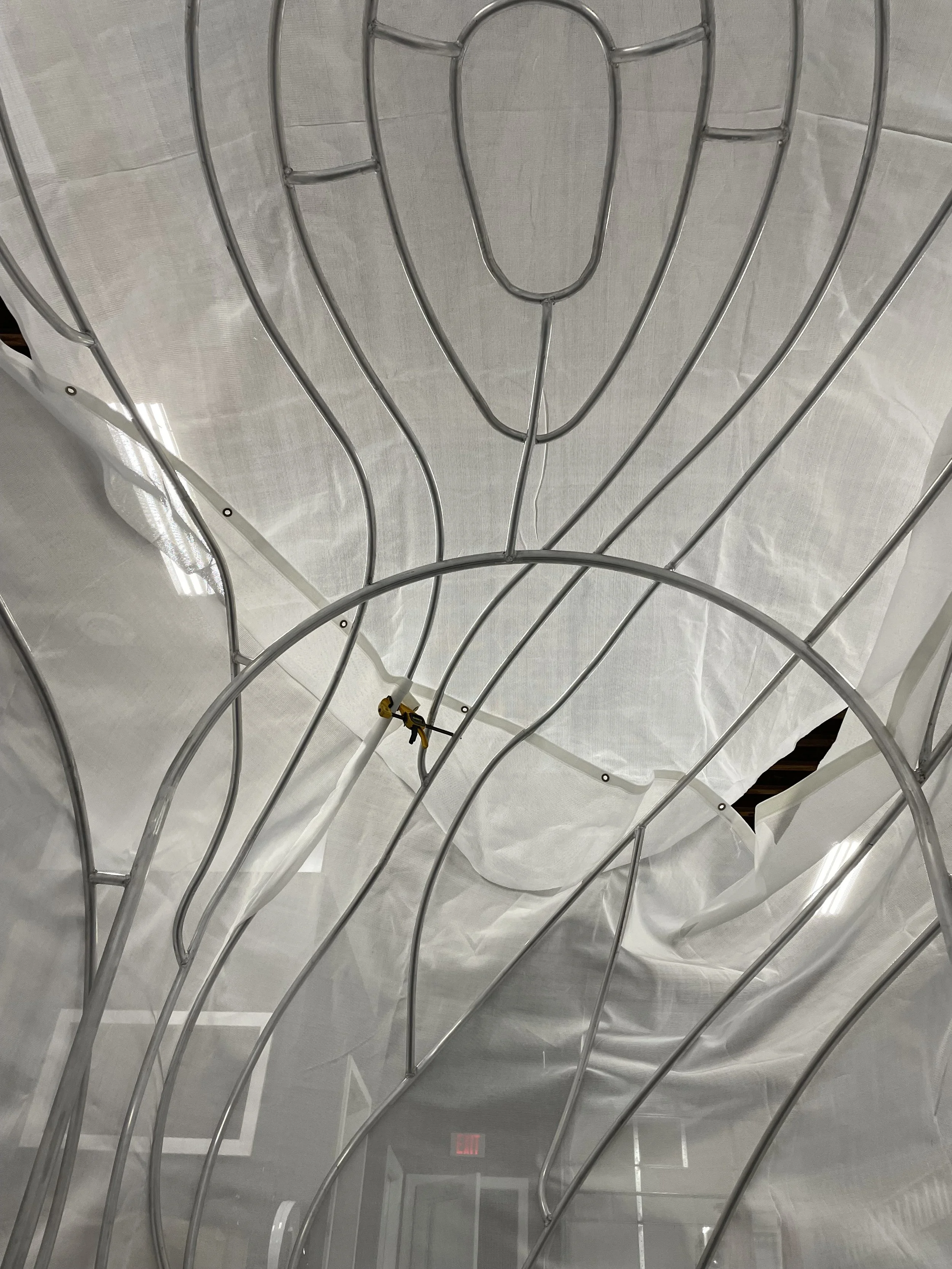
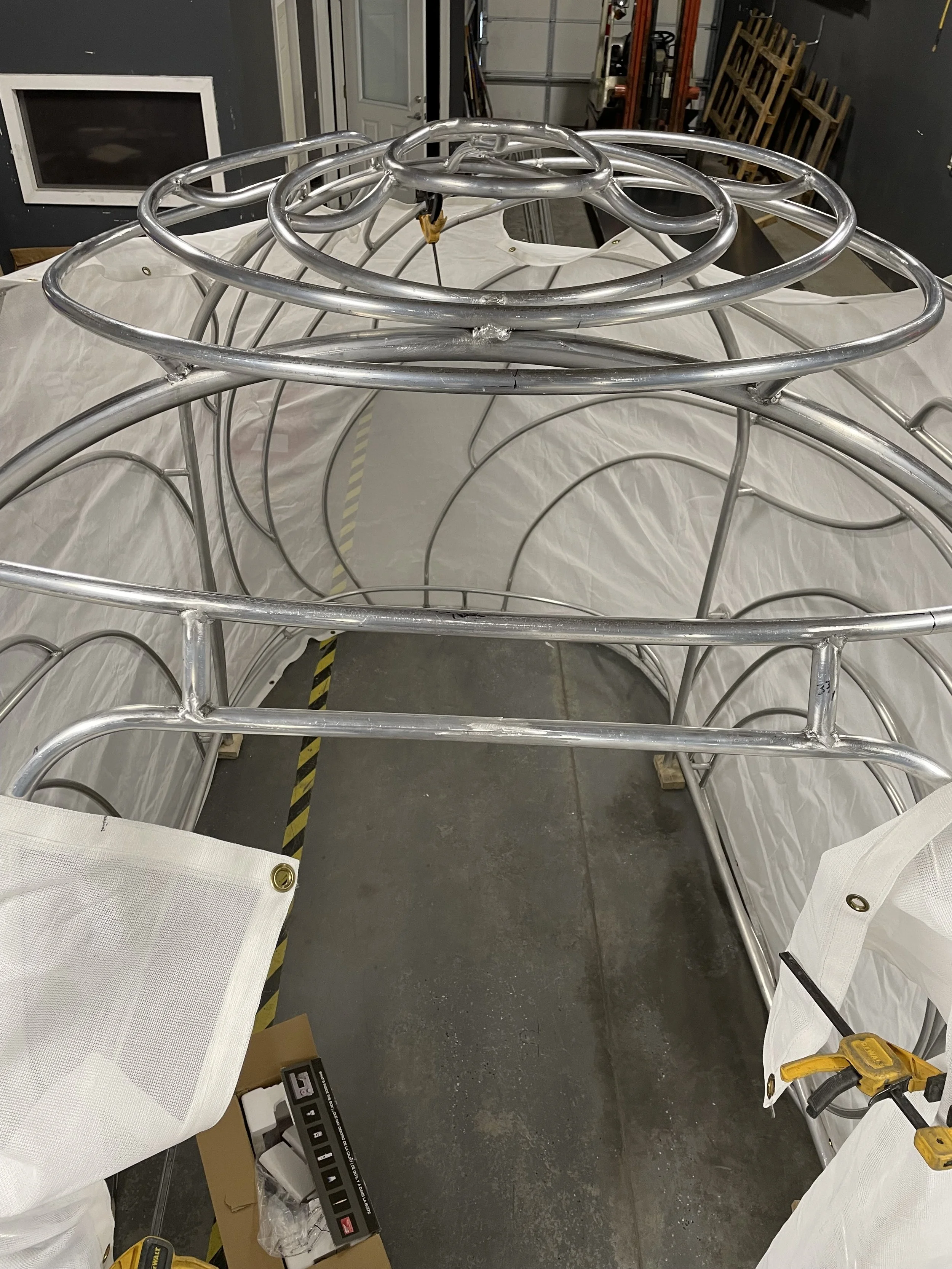
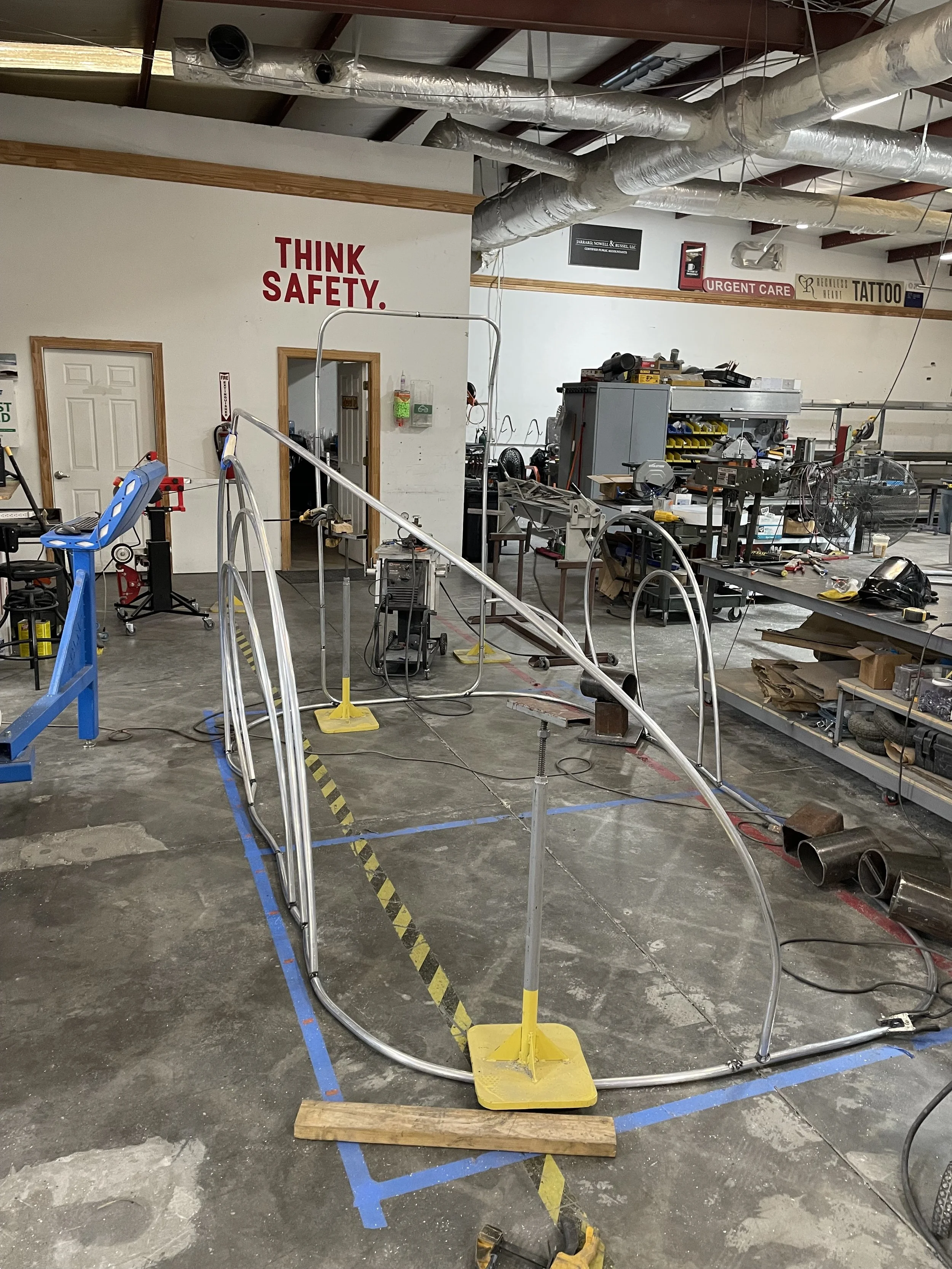
Aluminum frame progress in the fabrication studio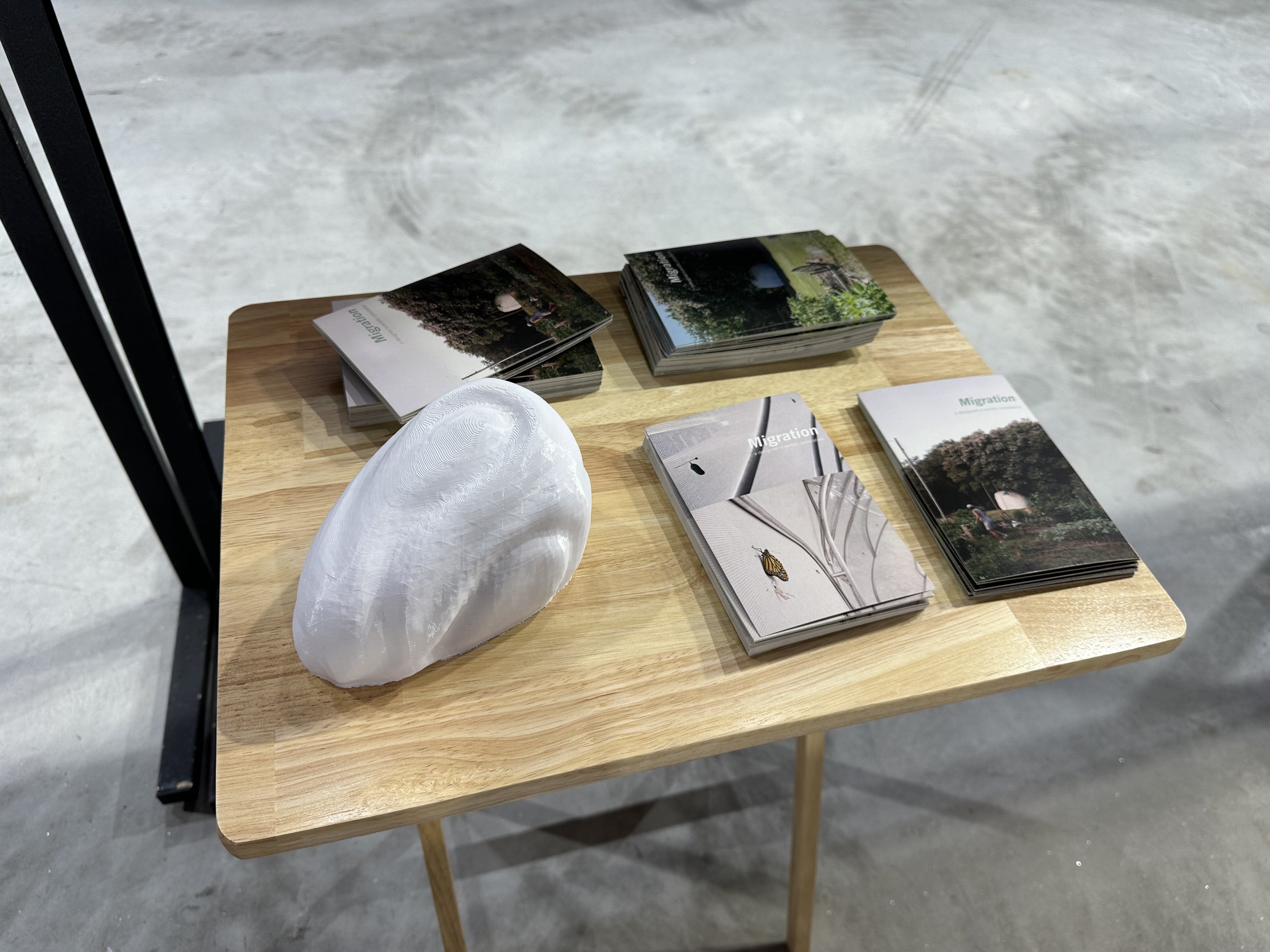
Interpretive System
Migration was designed as a layered interpretive environment, not a standalone object. Each touchpoint was calibrated for a different visitor type and moment of encounter:
Street-facing wayfinding drew passing drivers and pedestrians off the road and into the garden, functioning as the first layer of an invitation sequence, not a sign about an artwork but a prompt toward a discovery.
Garden bed signage positioned alongside the milkweed plots explained the plant's relationship to the monarch life cycle, giving visitors the ecological context to understand what they were about to encounter before they arrived at the sculpture itself.
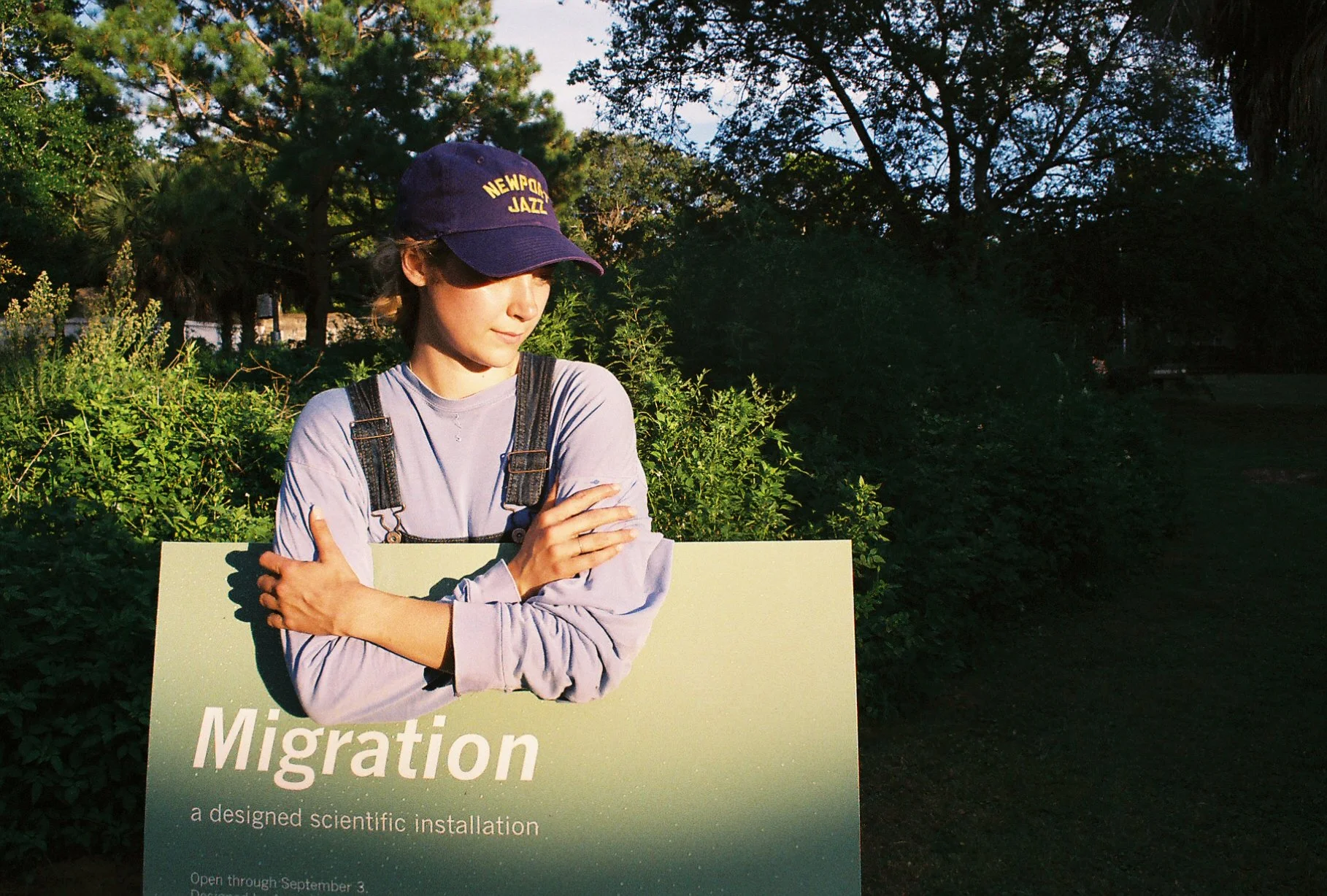
Threshold signage at the sculpture's entrance marked the transition from garden visitor to participant, framing the experience as something to step into rather than observe from outside.
A dedicated website and postcard series extended the interpretive experience beyond the physical site. Postcards placed in every mailbox in the town served as an at-home first encounter, seeding curiosity before the visit.
Together these touchpoints formed a complete visitor journey from first awareness through discovery, engagement, and reflection.
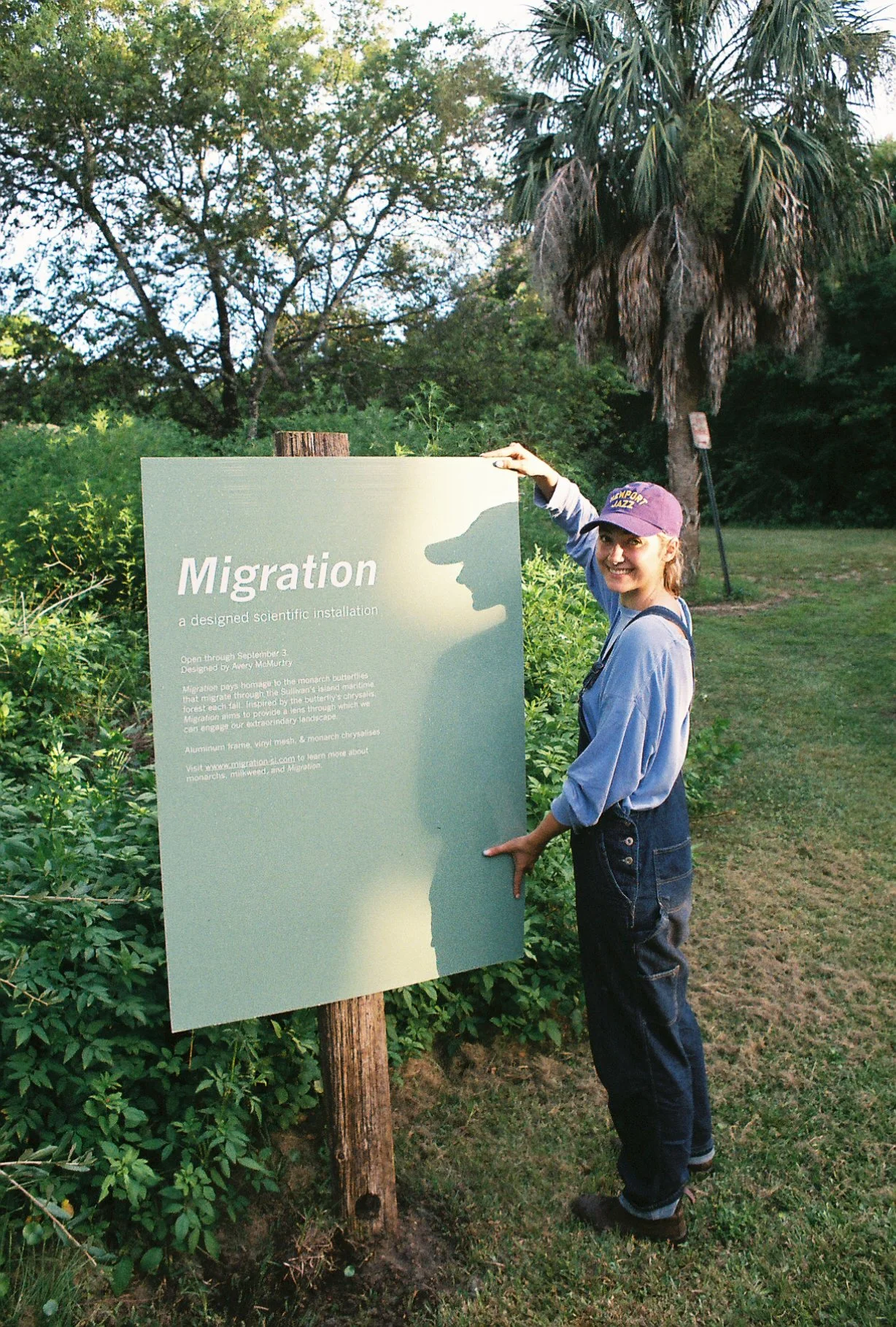
Street-facing signage on a locally salvaged driftwood post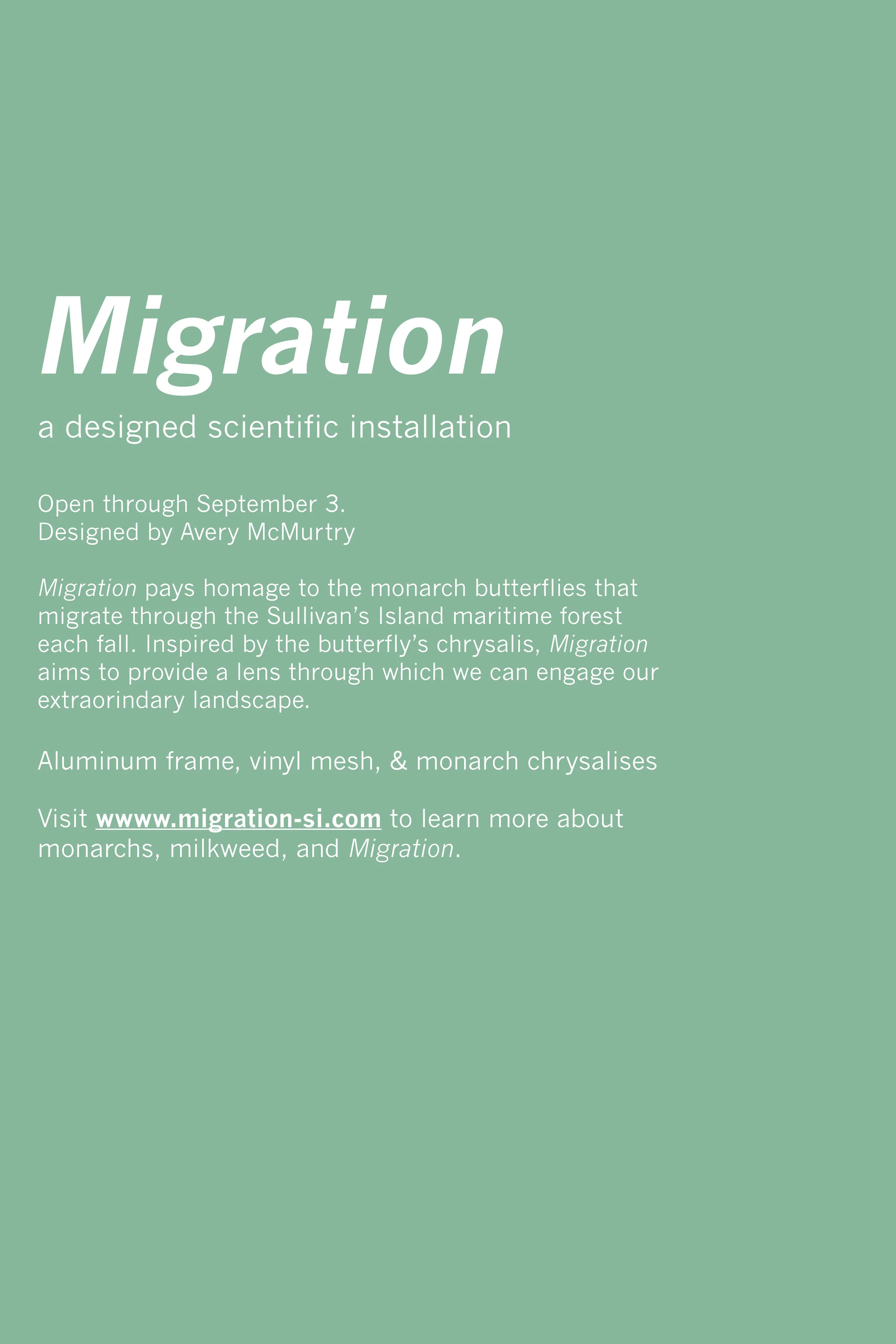
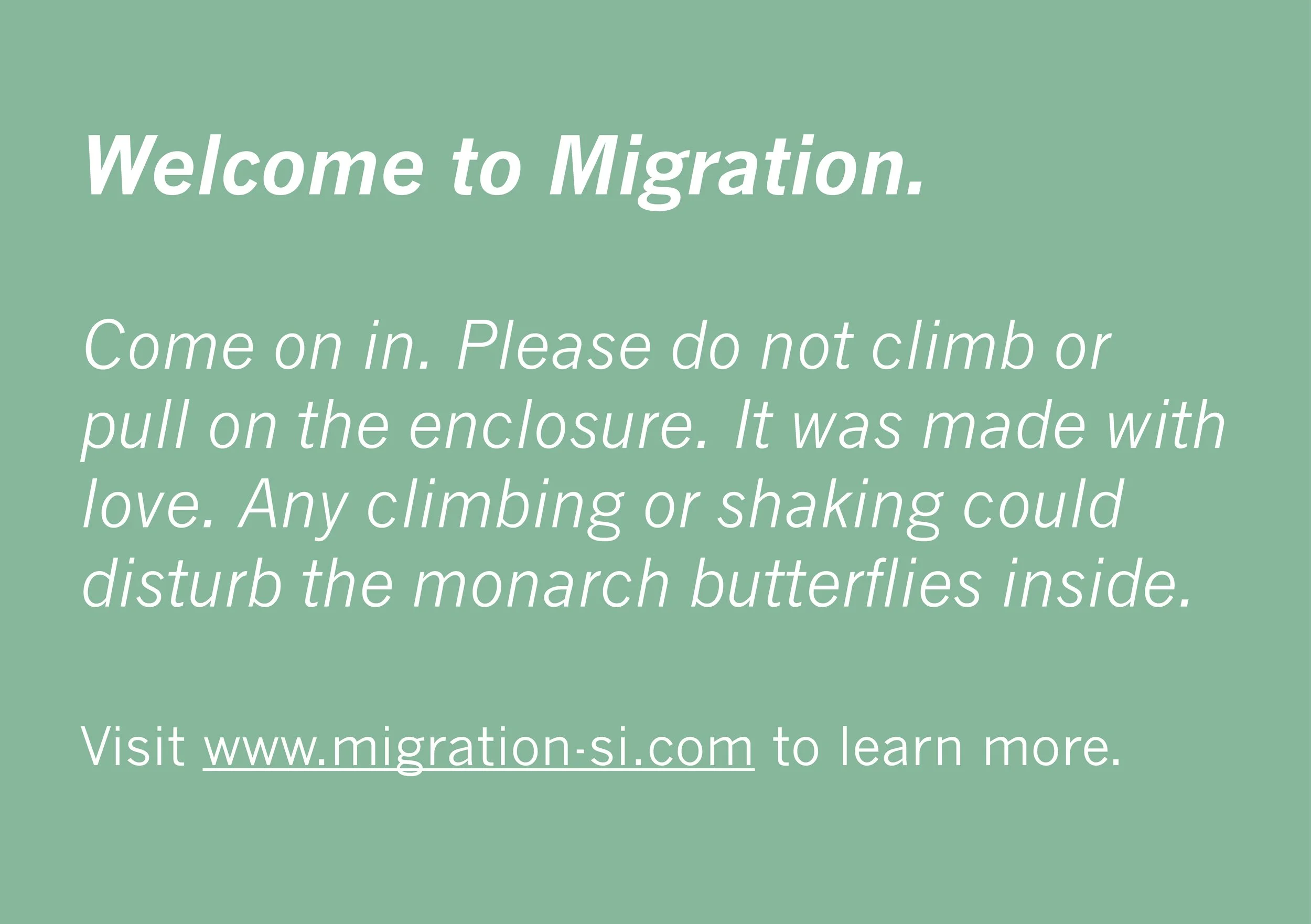
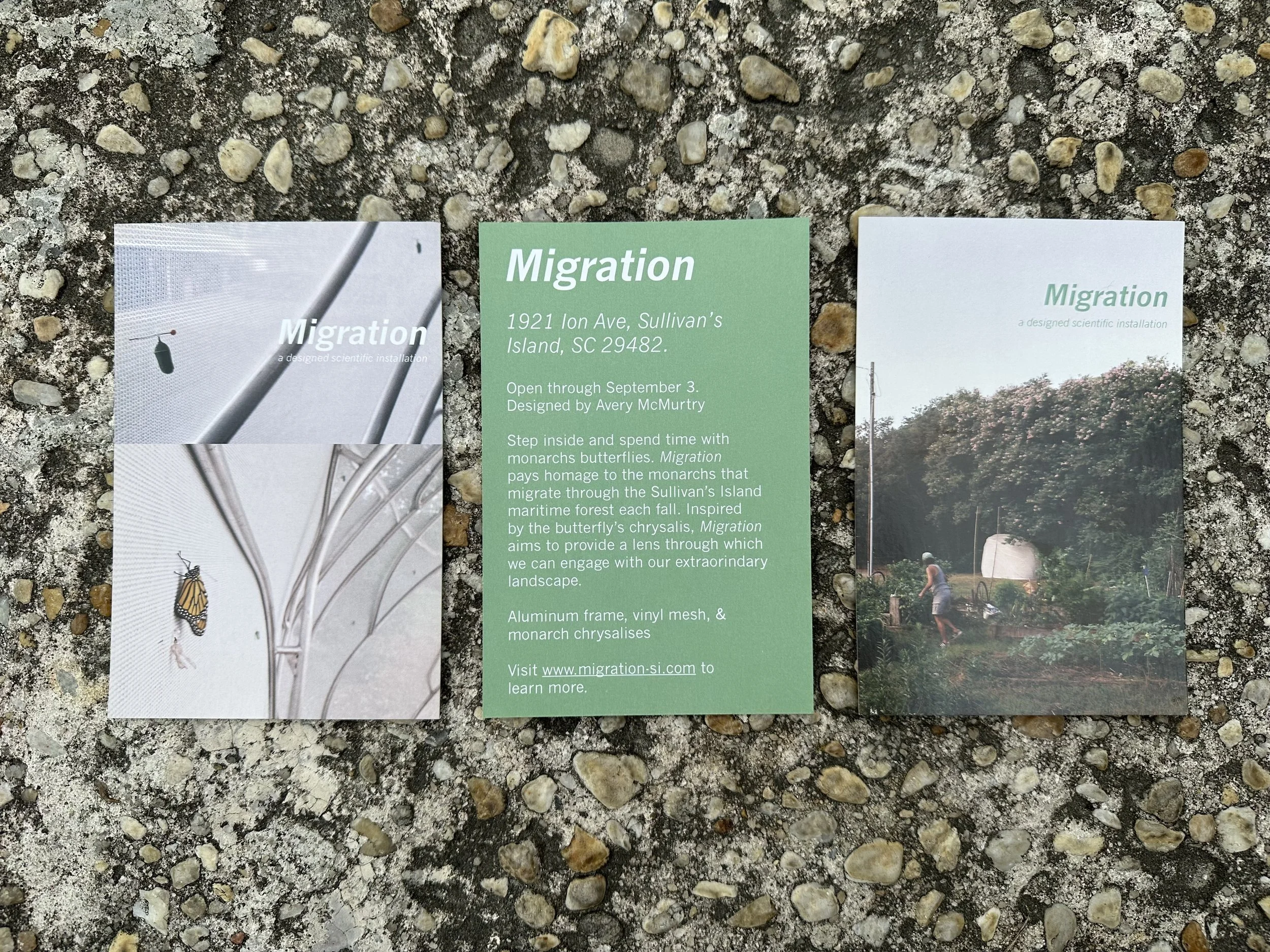
Postcard Series, hand-delivered to every mailbox in town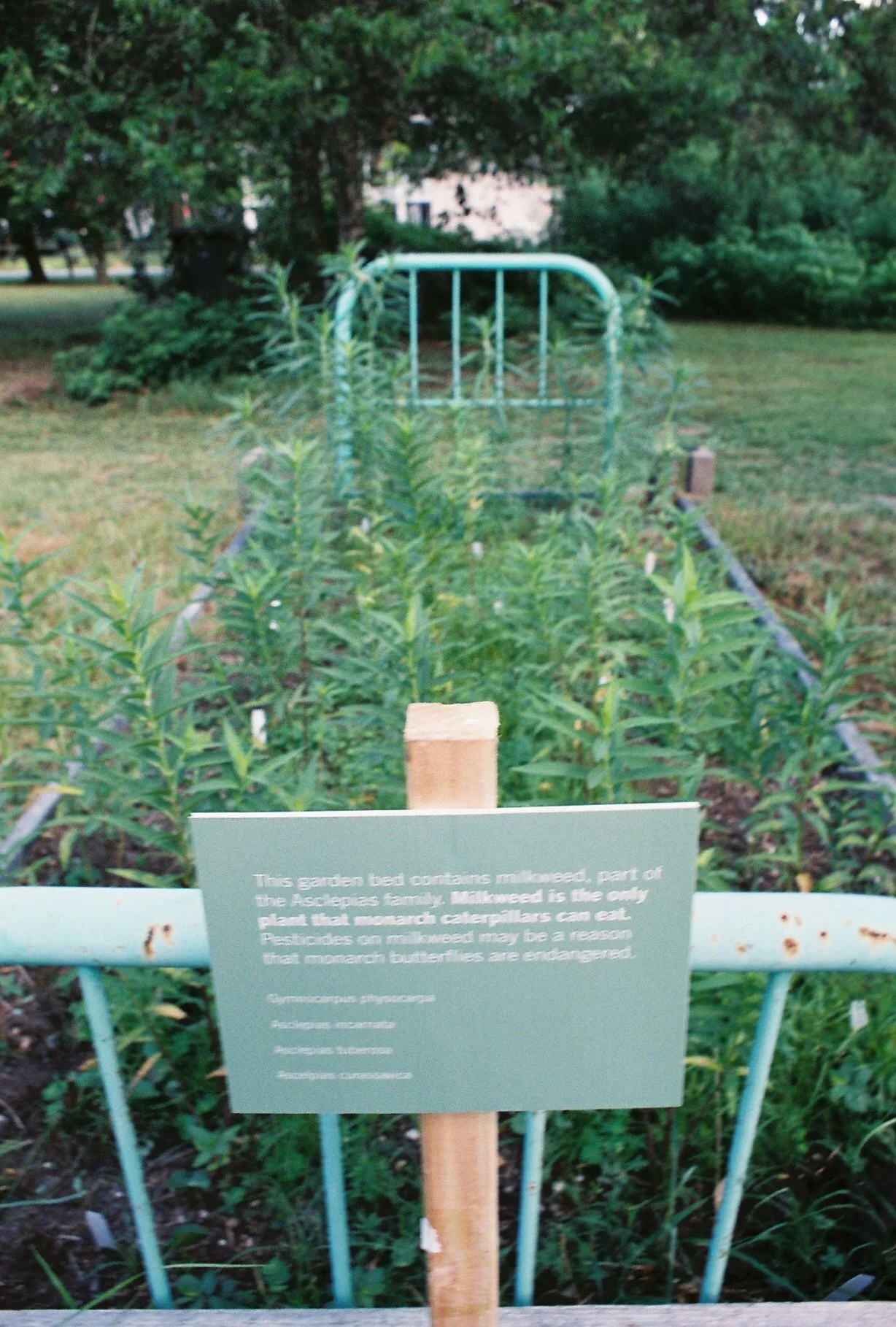
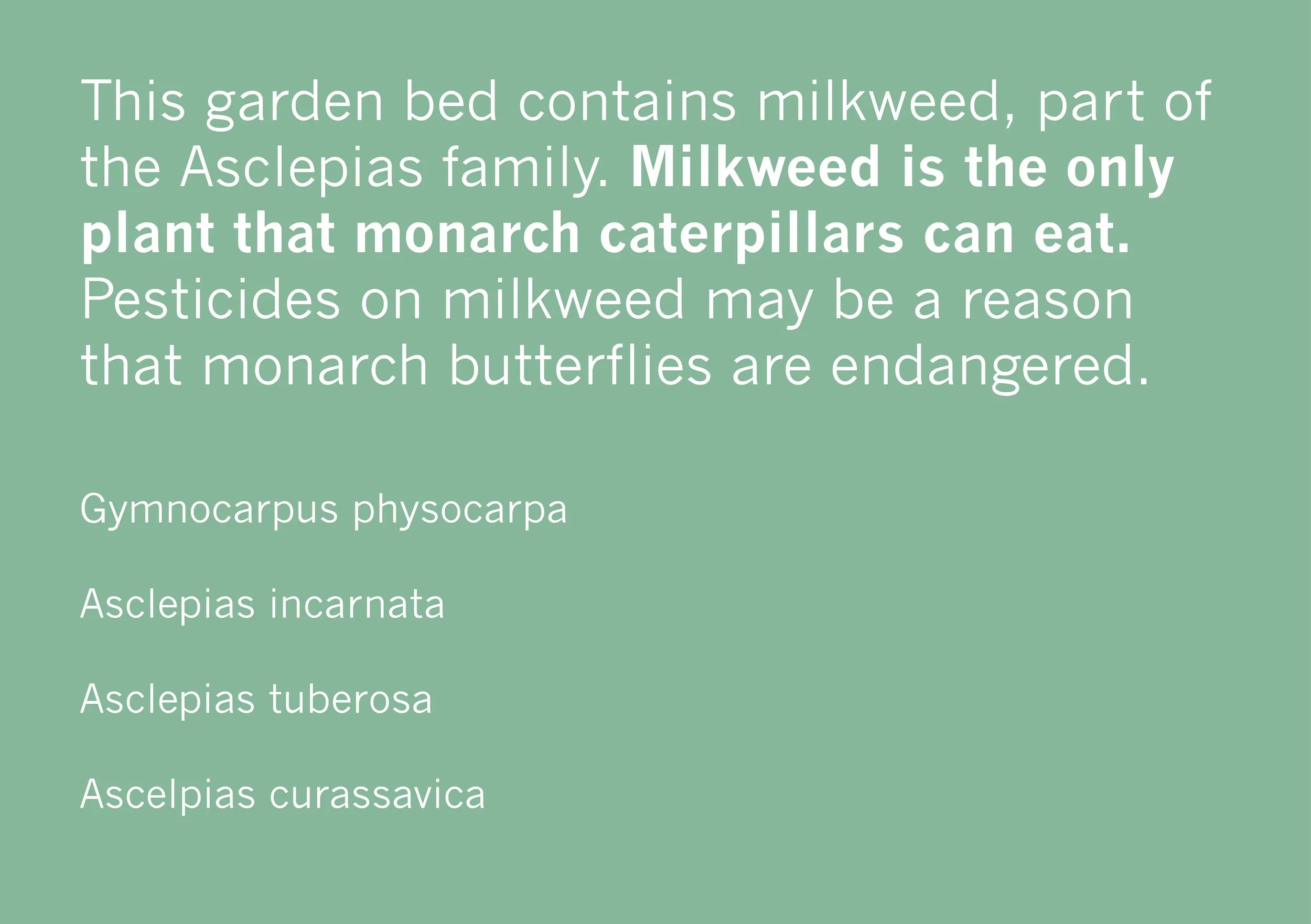
Garden bed signage identifying Asclepias species for visitors
Durational Experience Design
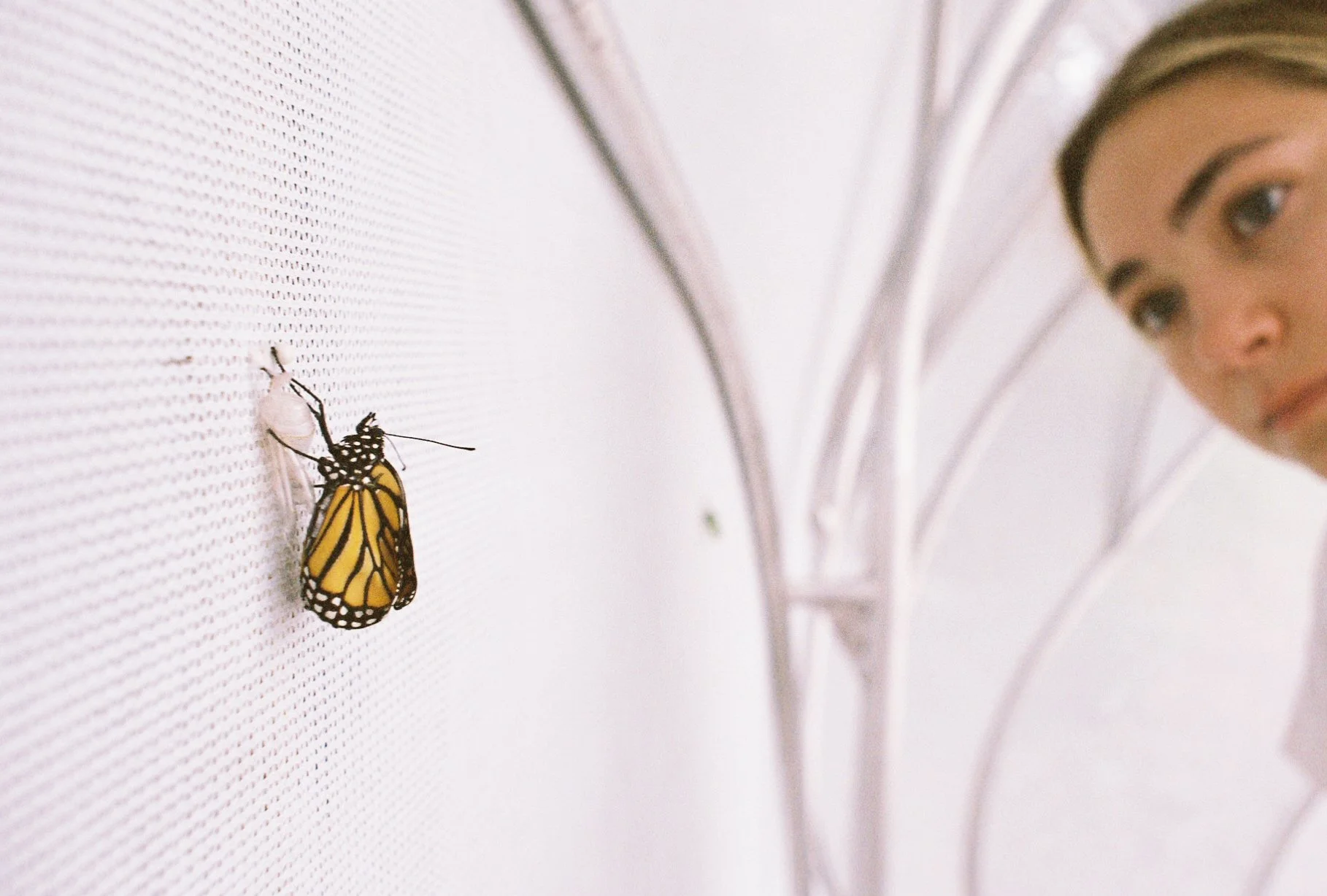
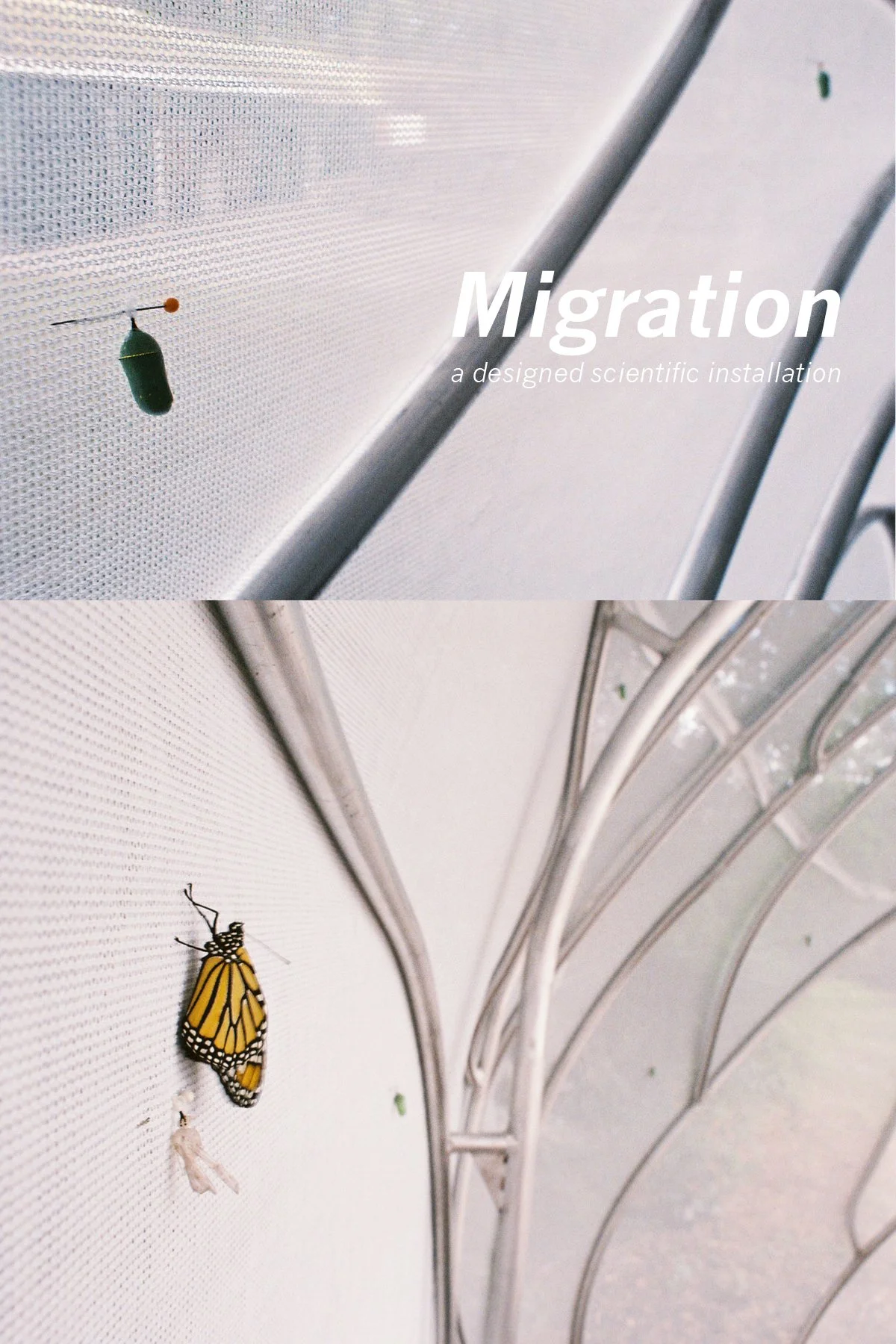
The most significant experience design decision in Migration was making the installation biologically alive and therefore different every day. Each morning I pinned new monarch chrysalises, harvested from my own cultivated garden beds, onto the mesh by their silk. Each day I released any hatched butterflies to continue their journey south. Over the course of the installation, approximately 150 chrysalises passed through the sculpture.
This daily ritual created an experience with a quality that static installations cannot achieve: reason to return. Visitors who came once found themselves checking back, curious whether a particular chrysalis they had noticed had hatched, whether new ones had arrived, and hoping to catch a chrysalis hatching in real time. Children from the nearby school came as a group and crouched close to the mesh; adults lingered. Several visitors returned multiple times across the installation's run.
The durational, participatory quality of the experience, the sense that something real was happening and that your presence was witnessing it, was the goal.
Civic Process and Community Engagement
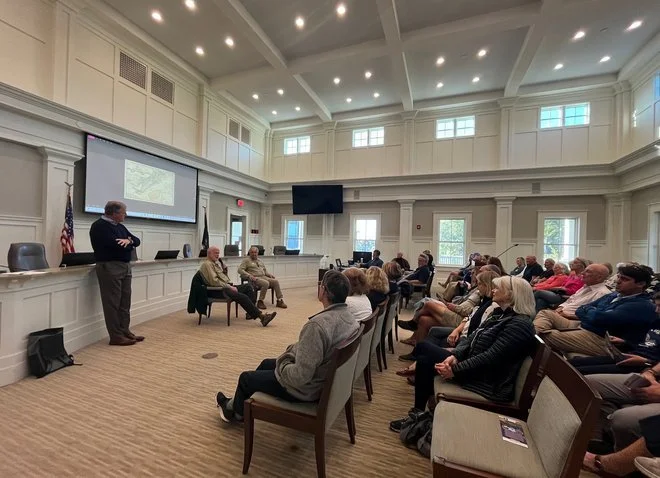
Installing Migration required navigating the Sullivan's Island Town Council approval process, presenting to the council and town manager, addressing concerns about siting and impact, and building the community trust necessary to be given stewardship of a shared public space. This civic dimension was itself a design challenge: how do you communicate the value of a designed ecological experience to a room of skeptical non-designers?
The approach was the same as the interpretive approach at the site: make the process visible and legible. Approval was granted.
Migration was funded by with the Northeastern University Trailblazer Award and Grant.
Outcomes and Reflection
Migration demonstrated that a designed experience can change how people perceive a place they already inhabit. Visitors who had walked past the community garden for years began looking up — talking about the forest, the migration, the season. The installation worked because it was specific: rooted in the actual ecology of one place, designed to reward attention, and structured to bring visitors into a relationship with a living process rather than a finished object.
The project brought together concept development, spatial and object design, material fabrication, interpretive content writing, graphic and signage design, community engagement, and civic process navigation — the full range of skills required to bring a designed experience from idea to encounter.